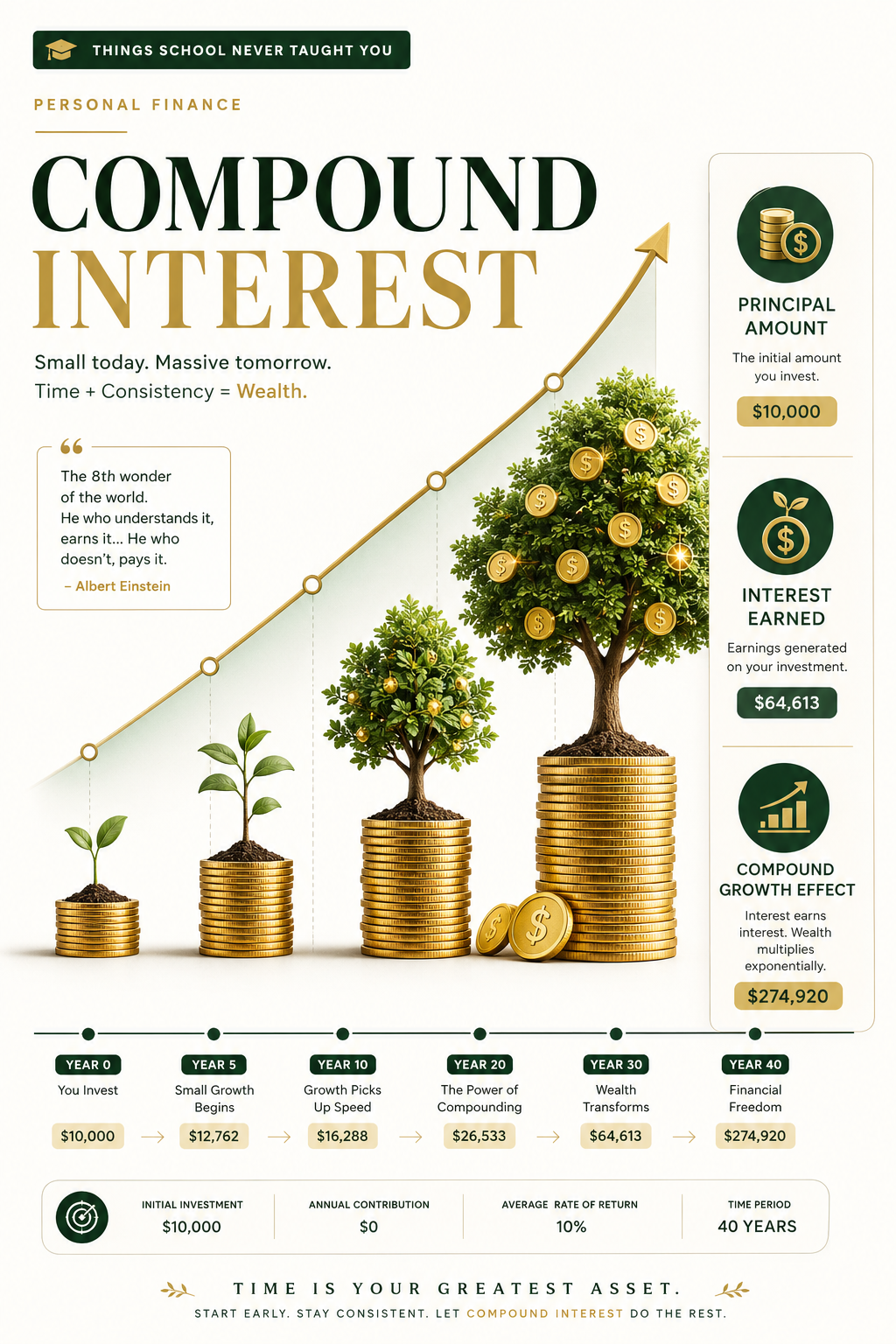
Definition:
Compound interest is the process where interest is earned on both the original amount of money and the previously earned interest.
It is often called:
"Interest on interest"
---
How It Works:
You invest money → it earns interest
That interest gets added to your original amount
In the next cycle, interest is calculated on the new total amount
This process repeats over time
---
Formula:
Where:
A = Final amount
P = Principal amount
r = Annual interest rate
n = Number of times interest compounds per year
t = Time in years
---
Example:
₹10,000 invested at 10% annual interest
Year 1 → ₹11,000
Year 2 → ₹12,100
Year 3 → ₹13,310
Your money grows faster because interest keeps earning more interest.
---
Why It Matters:
Long-term investing
Retirement funds
Mutual funds
Savings growth
The earlier you start, the more powerful compounding becomes.
---
Key Takeaway:
Time is the biggest advantage in compound interest.
Small investments made early can grow into large amounts over decades.
 Continue With Google
  Account and Finance
 Business
 Education