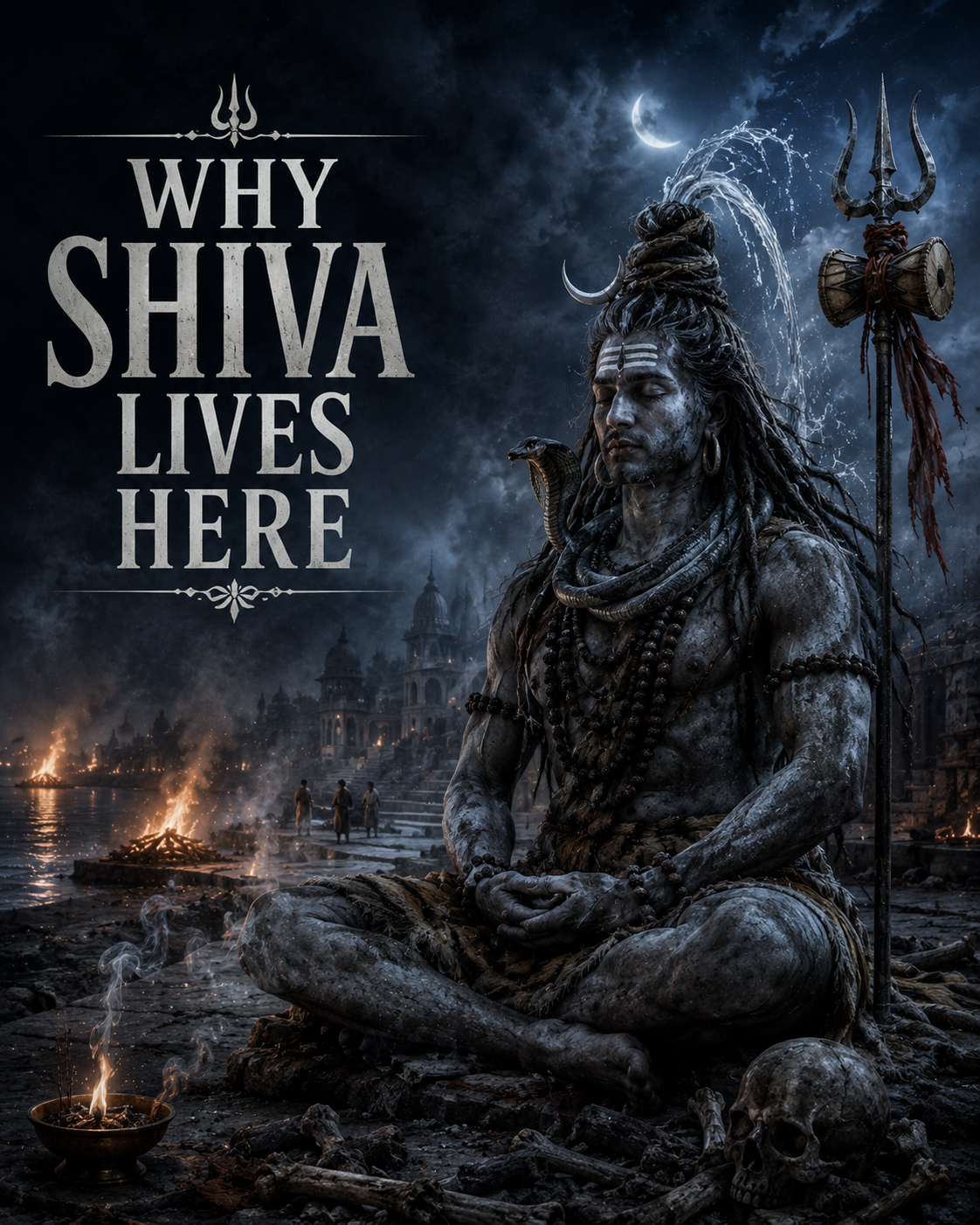
Most Hindu gods are imagined in palaces.
Gold.
Jewels.
Grand thrones.
Divine kingdoms.
But Lord Shiva breaks every pattern.
He chooses ash over perfume.
Silence over celebration.
And cremation grounds over palaces.
Why?
Ancient texts describe Lord Shiva as the god who destroys illusion.
A cremation ground is where every human identity disappears.
Wealth means nothing.
Beauty fades.
Power ends.
Ego burns.
Kings and beggars become equal.
That space represents the ultimate truth of life—
everything temporary eventually disappears.
Lord Shiva living there symbolizes complete detachment from material life.
His body covered in ash reflects the final state of all physical existence.
Even his companions were said to be ghosts, spirits, and beings rejected by society.
That symbolism was radical.
Shiva became the god who accepts what the world fears.
Death.
Loneliness.
Imperfection.
Chaos.
And transforms it into liberation.
This is why many spiritual traditions see Lord Shiva not as a frightening god—
but as the one who teaches humans how to stop fearing death.
He doesn’t live near cremation grounds to celebrate death.
He lives there to remind you what truly matters before death arrives.
 Continue With Google
  Religion and Spirituality

