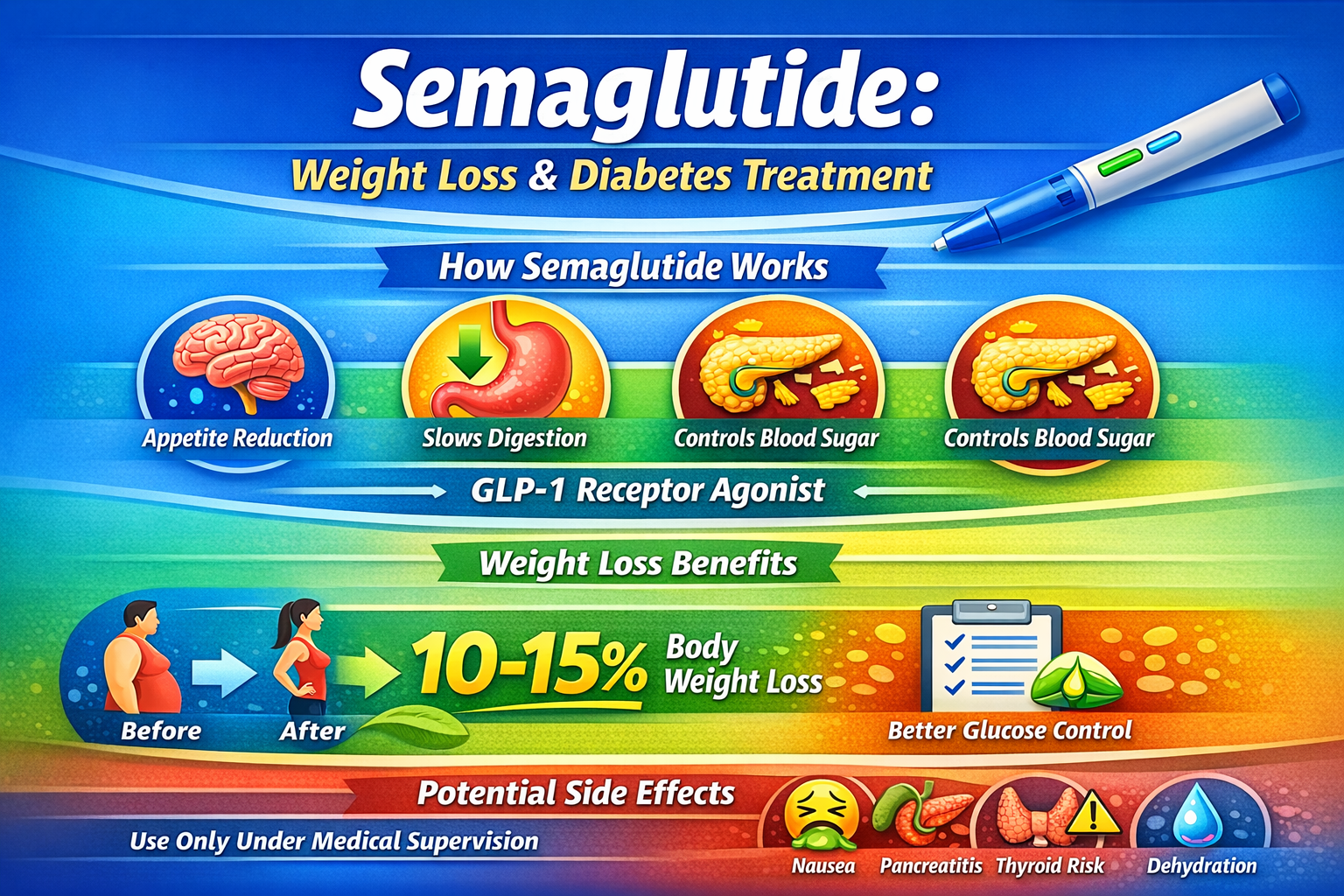
This drug has gained massive attention worldwide because it can produce 10–15% body weight reduction, which is significant compared with many previous anti-obesity medications.
Semaglutide works by mimicking GLP-1 hormone, which is naturally released from the intestine after eating.
🟢 Pancreas
Increases glucose-dependent insulin secretion
Reduces glucagon release
➡ Result: Lower blood glucose levels
🟢 Brain (Hypothalamus)
Activates satiety centers
Reduces hunger signals
➡ Result: Reduced appetite and calorie intake
🟢 Stomach
Delays gastric emptying
➡ Result:
Food stays longer in stomach
Person feels full for longer
🟢 Liver
Reduced glucose production
➡ Result: Better glycemic control
💡 Net Clinical Effect
✔ Improved blood sugar control
✔ Significant weight loss
✔ Reduced cardiovascular risk in diabetics
Semaglutide is administered once weekly by subcutaneous injection.
| Week | Dose |
|---|---|
| Week 1–4 | 0.25 mg once weekly |
| Week 5–8 | 0.5 mg once weekly |
| Week 9–12 | 1 mg once weekly |
| Week 13–16 | 1.7 mg once weekly |
| Maintenance | 2.4 mg once weekly |
⚠️ Dose escalation is gradual to reduce gastrointestinal side effects.
| Stage | Dose |
|---|---|
| Initial | 0.25 mg weekly |
| Maintenance | 0.5–1 mg weekly |
| Maximum | 2 mg weekly |
💉 Subcutaneous injection
Common sites:
Abdomen
Thigh
Upper arm
Clinical trials (STEP trials) show:
✔ Average weight loss: 10–15% of body weight
Example:
| Initial Weight | Possible Weight Loss |
|---|---|
| 100 kg | 10–15 kg |
| 80 kg | 8–12 kg |
Semaglutide can reduce:
HbA1c by ~1–1.8%
This significantly improves Type 2 diabetes control.
Studies show reduced risk of:
❤️ Heart attack
❤️ Stroke
❤️ Cardiovascular mortality
✔ Reduced visceral fat
✔ Lower triglycerides
✔ Reduced insulin resistance
Most adverse effects are gastrointestinal, especially during dose escalation.
| Side Effect | Reason |
|---|---|
| 🤢 Nausea | Delayed gastric emptying |
| 🤮 Vomiting | GI motility changes |
| 💩 Diarrhea | Gut hormone effects |
| 🤕 Abdominal pain | GI slowing |
| 🍽️ Reduced appetite | Central satiety effect |
These usually improve after a few weeks.
⚠️ Gallbladder Disease
Increased risk of gallstones due to rapid weight loss.
⚠️ Pancreatitis (Rare but Serious)
Symptoms:
Severe abdominal pain
Radiating to back
Vomiting
🚨 Thyroid C-Cell Tumor Risk
Animal studies showed:
Medullary thyroid carcinoma (MTC)
Because of this:
❌ Avoid in patients with:
Family history of MTC
MEN-2 syndrome
Low when used alone.
But risk increases if combined with:
Insulin
Sulfonylureas
Semaglutide should NOT be used in:
🚫 Medullary thyroid carcinoma
🚫 MEN-2 syndrome
🚫 Severe gastrointestinal disease
🚫 Pregnancy
| Brand | Indication |
|---|---|
| Ozempic | Type 2 Diabetes |
| Wegovy | Obesity |
| Rybelsus | Oral Semaglutide |
Reasons for its popularity:
✔ Significant weight loss
✔ Weekly injection (convenient)
✔ Cardiovascular protection
✔ Strong clinical trial evidence
This is why many people call it “The weight-loss revolution drug.”
Semaglutide should only be used under medical supervision.
Because:
Dose titration required
Monitoring needed
Side effects must be managed
 Continue With Google
  Medicines
 Health