Origin, Strength, Importance in the Indian Economy, and Role in International Banking
1. Origin and History
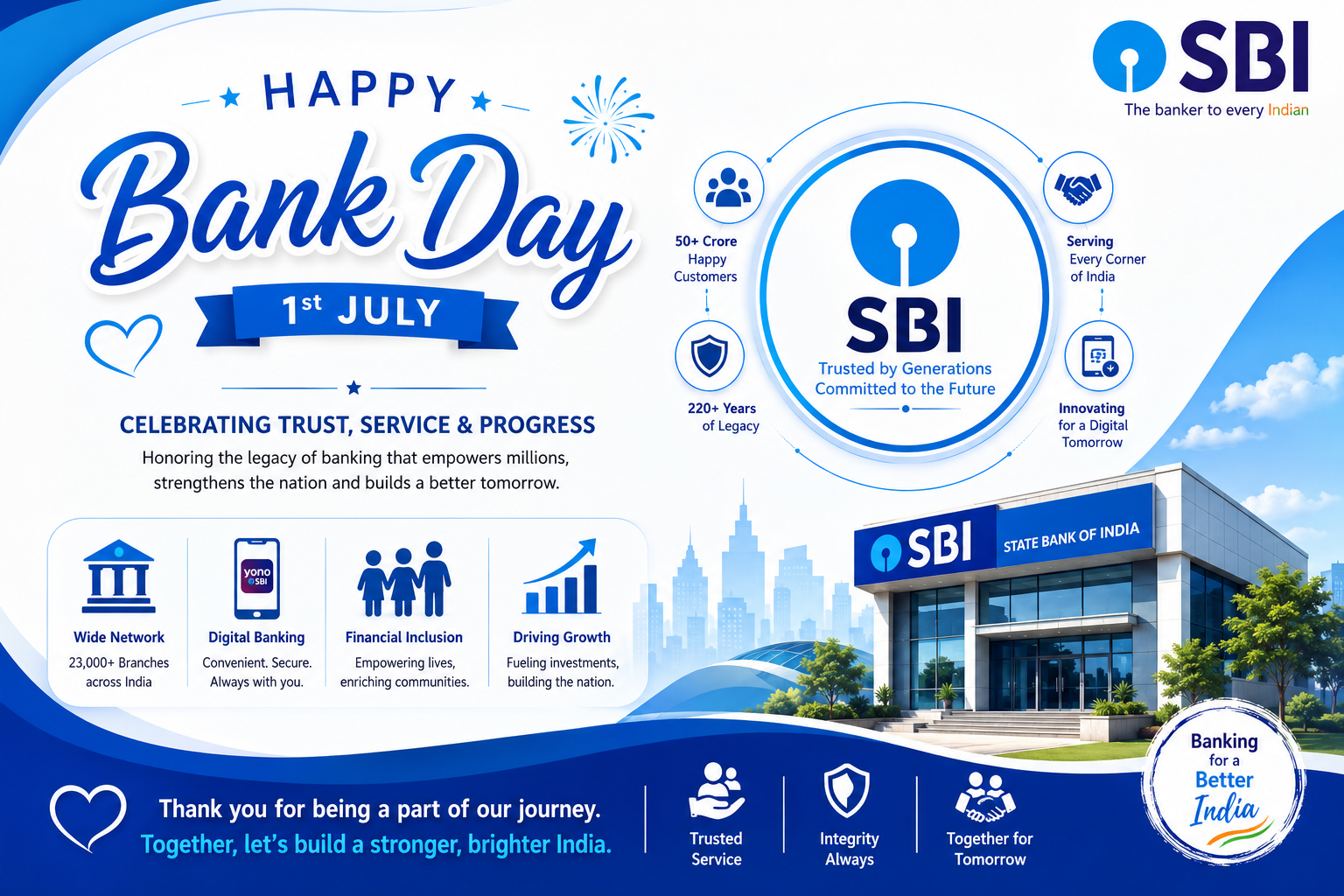
State Bank of India (SBI) is India's largest public sector bank and the country's oldest commercial banking institution. Its history spans more than 220 years.
The evolution of SBI is as follows:
- 1806 – The Bank of Calcutta was established, becoming the first joint-stock bank in India.
- 1809 – It was renamed the Bank of Bengal.
- 1840 – The Bank of Bombay was established.
- 1843 – The Bank of Madras was established.
- 1921 – These three Presidency Banks merged to form the Imperial Bank of India.
- 1 July 1955 – The Government of India, with the support of the Reserve Bank of India, nationalized the Imperial Bank of India, creating the State Bank of India.
- 1959 – The State Bank of India (Subsidiary Banks) Act, 1959 enabled several state-associated banks to become SBI's associate banks.
- 2017 – SBI merged its five associate banks and the Bharatiya Mahila Bank into SBI, making it one of the world's largest banking institutions.
2. Strength of State Bank of India
SBI is the largest banking and financial services institution in India due to its:
- Largest branch network in the country.
- Presence in urban, semi-urban and rural India.
- Strong digital banking ecosystem through YONO, Internet Banking and Mobile Banking.
- Leadership in retail, corporate, agricultural, SME and international banking.
- Large customer base exceeding 50 crore customers.
- Systemically Important Bank (D-SIB), often referred to as "too big to fail" because of its importance to India's financial system.
- Consistent profitability and one of the highest market capitalizations among Indian banks.
3. Importance in the Indian Economy
SBI plays a vital role in India's economic development by:
- Mobilizing household and institutional savings.
- Providing credit to agriculture, MSMEs, industries and infrastructure projects.
- Supporting government flagship schemes such as:
- Pradhan Mantri Jan Dhan Yojana
- Pradhan Mantri Mudra Yojana
- Stand-Up India
- Direct Benefit Transfer (DBT)
- Social security and pension schemes.
- Promoting financial inclusion by expanding banking services to rural and remote areas.
- Supporting economic growth through financing manufacturing, exports, housing, education and infrastructure.
- Maintaining financial stability as India's largest public sector bank.
Because of its extensive reach and financial strength, SBI significantly influences India's banking sector, monetary transmission and overall economic development.
4. Role in International Banking
SBI has established a strong global presence and serves as India's banking ambassador abroad.
Its international role includes:
- International branches across major financial centres.
- Overseas offices and representative offices.
- Financing international trade and exports.
- Foreign exchange and treasury operations.
- NRI banking services.
- Correspondent banking relationships with banks worldwide.
- Trade finance through Letters of Credit, Bank Guarantees and Export Credit.
- Cross-border remittance services.
- International syndication and project finance.
- Supporting Indian companies expanding overseas.
SBI has a presence across Asia, Europe, North America, Africa and the Middle East through branches, subsidiaries, representative offices and joint ventures.
5. Major Areas of Business
- Retail Banking
- Corporate Banking
- MSME Banking
- Agriculture Banking
- International Banking
- Treasury Operations
- Digital Banking
- Wealth Management
- Insurance Distribution
- Mutual Funds
- Credit Cards
- Investment Banking
6. Scale of Operations (Latest Available Official Figures)
According to SBI's Annual Report 2025–26 (covering the financial year ended 31 March 2026), the bank had:
- Branches: 23,085
- Employees (Staff Strength): 2,36,221
- ATMs/CDMs: 63,580
- Business Correspondent (BC) Outlets: 82,900+
- Foreign Branches/Offices: 244
Note: SBI has not publicly released separate branch or employee figures specifically as on 30 June 2026. Therefore, the latest official audited numbers available are those as of 31 March 2026, from the Annual Report 2025–26.
Conclusion
State Bank of India is not only the largest commercial bank in India but also one of the most influential financial institutions globally. With a legacy of more than two centuries, an extensive domestic and international network, and a pivotal role in financial inclusion and economic development, SBI remains the backbone of the Indian banking system. Its continued emphasis on technology, customer service, sustainable banking and global expansion ensures that it remains a key driver of India's economic growth and international financial presence.
 Continue With Google
  Current affair