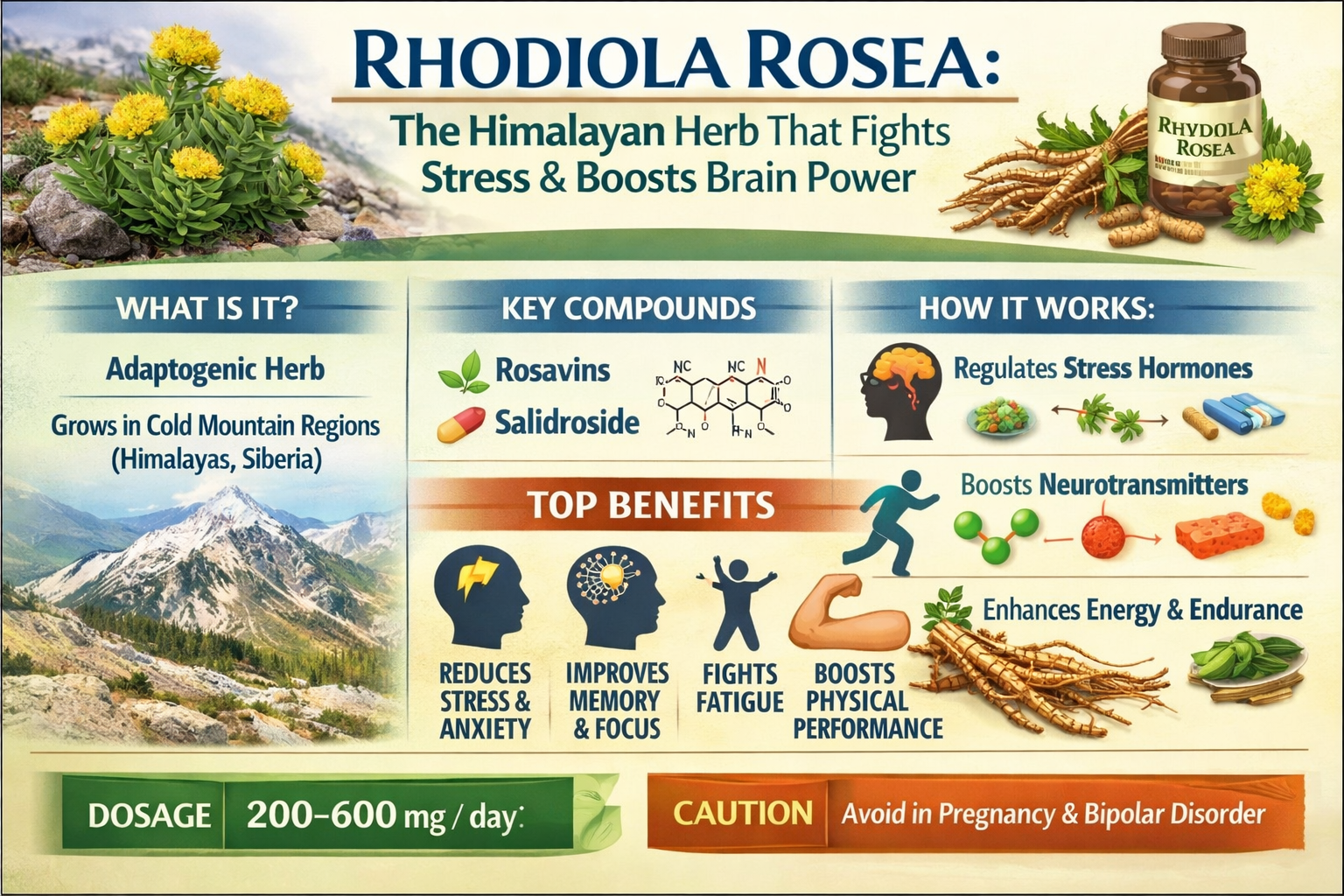
“Imagine a natural herb that can reduce stress, boost energy, improve focus, and fight fatigue — all without caffeine.”
This herb grows in the extreme cold mountains of Siberia and the Himalayas, where plants must survive harsh climates and low oxygen levels.
And surprisingly, this same herb may help humans handle stress and fatigue better.
Today we are talking about Rhodiola Rosea, also known as Golden Root.
• What is Rhodiola Rosea
• How it works in the body
• Its benefits for stress, brain function, and fatigue
• Correct dosage
• Possible side effects
Rhodiola Rosea is a medicinal herb belonging to the plant family Crassulaceae.
It grows naturally in:
• Siberia
• Scandinavia
• Himalayan regions
• Arctic mountains
For centuries, traditional medicine systems used this herb to:
• Increase stamina
• Improve mental performance
• Reduce fatigue
Because of its ability to help the body adapt to stress, Rhodiola is classified as an adaptogen.
Adaptogens are natural substances that help the body maintain balance during stress.
The powerful effects of Rhodiola come from two main bioactive compounds.
These include:
• Rosavin
• Rosarin
• Rosin
Rosavins are mainly responsible for the adaptogenic and anti-fatigue effects.
This compound provides:
• Neuroprotective effects
• Antioxidant activity
• Anti-inflammatory benefits
Most standardized supplements contain:
• 3% Rosavins
• 1% Salidroside
Rhodiola works through several mechanisms.
Rhodiola helps regulate the Hypothalamic-Pituitary-Adrenal axis, which controls the body’s stress response.
This leads to:
• Reduced cortisol levels
• Better stress tolerance
Rhodiola increases important brain chemicals such as:
• Serotonin
• Dopamine
• Norepinephrine
These neurotransmitters control:
• Mood
• Focus
• Motivation
• Mental energy
Rhodiola enhances mitochondrial energy production, increasing ATP generation.
This results in:
• Reduced fatigue
• Increased physical endurance
• Better mental clarity
Rhodiola helps reduce mental stress and emotional exhaustion.
It is often used for burnout and chronic stress.
Studies show Rhodiola may improve:
• Concentration
• Memory
• Cognitive performance
This makes it useful for:
• Students
• Professionals
• People under heavy workload
Rhodiola is widely used for fatigue syndromes.
It improves:
• Energy levels
• Physical stamina
• Mental alertness
Athletes use Rhodiola to enhance:
• Endurance
• Recovery
• Oxygen utilization
Rhodiola’s antioxidant properties may protect neurons from oxidative stress, which is linked to neurodegenerative diseases.
Typical daily dosage ranges between:
200 mg to 600 mg per day
Most supplements are standardized to:
• 3% rosavins
• 1% salidroside
It is best taken:
• In the morning
• Or early afternoon
Taking it late in the evening may cause insomnia.
Rhodiola is generally safe, but some people may experience:
• Dizziness
• Dry mouth
• Mild headache
• Sleep disturbances
These effects are usually mild and temporary.
Rhodiola should be used cautiously in:
• Pregnant or breastfeeding women
• People with bipolar disorder
• Individuals taking antidepressant medications
Always consult a healthcare professional before using supplements.
Rhodiola Rosea is a fascinating herb that may help with:
• Stress management
• Mental performance
• Fatigue reduction
• Physical endurance
However, while early research is promising, more large clinical trials are needed to fully confirm its long-term benefits.
 Continue With Google
  Ayurveda
 Health