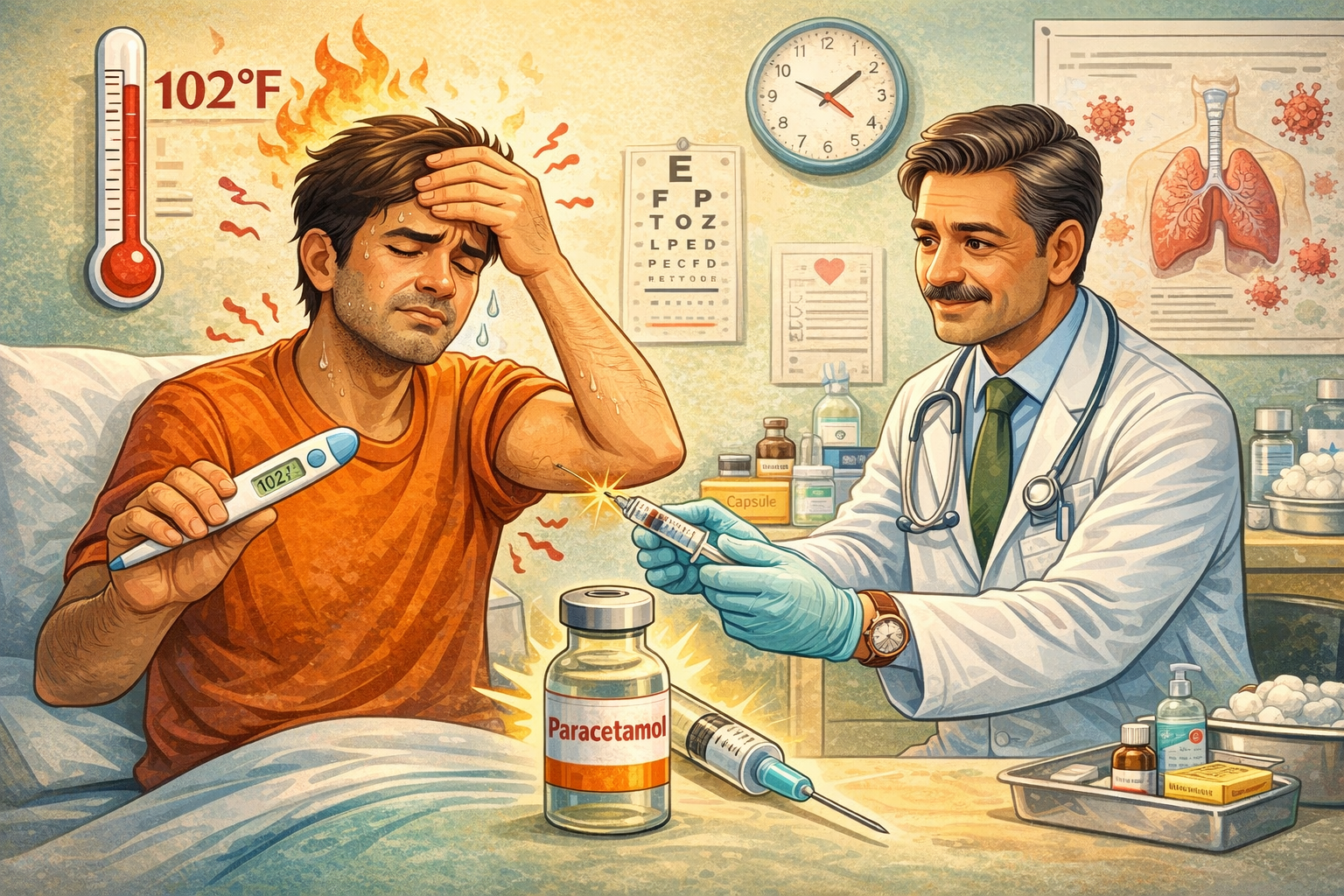
Because it is so common, many misconceptions (myths) exist about this drug. Understanding the true effects, mechanism, and risks is important for safe use.
Paracetamol is a non-opioid analgesic and antipyretic drug used to treat:
✔ Fever
✔ Headache
✔ Body pain
✔ Toothache
✔ Muscle pain
✔ Menstrual pain
✔ Cold and flu symptoms
Unlike many painkillers, it does not significantly reduce inflammation.
Paracetamol mainly works in the central nervous system (brain and spinal cord).
1️⃣ Inhibits Cyclooxygenase (COX) enzymes in the brain
Reduces production of prostaglandins (pain and fever mediators).
2️⃣ Acts on the Hypothalamus
Resets the body temperature set-point, reducing fever.
3️⃣ Central Analgesic Effect
Modulates pain pathways in the brain.
Unlike NSAIDs like Ibuprofen or Aspirin, paracetamol has:
❌ Minimal anti-inflammatory activity
❌ Minimal gastric irritation
❌ No significant platelet inhibition
Paracetamol reduces fever by:
Acting on the thermoregulatory center in the hypothalamus
Increasing heat loss through sweating and vasodilation
Commonly used in:
✔ Viral fever
✔ Flu
✔ Dengue supportive treatment
✔ COVID fever management
Effective for mild to moderate pain such as:
Headache
Toothache
Musculoskeletal pain
Osteoarthritis
Post-vaccination pain
Less effective for severe inflammatory pain.
Compared to NSAIDs, paracetamol is:
✔ Safer for children
✔ Preferred in pregnancy (recommended doses)
✔ Safer in gastric ulcer patients
But caution is required in liver disease.
❌ False
Overdose can cause severe liver damage.
It is actually the most common cause of drug-induced liver failure worldwide.
❌ Dangerous myth
Taking extra tablets does NOT increase effectiveness, but it dramatically increases toxicity risk.
❌ Incorrect
Alcohol increases risk of liver toxicity.
Chronic alcohol use increases formation of toxic metabolite NAPQI.
❌ Every medicine has side effects.
Paracetamol is safer than many drugs, but not completely harmless.
❌ Wrong.
Paracetamol is not a strong anti-inflammatory drug.
For inflammation, drugs like Diclofenac or Ibuprofen are more effective.
Paracetamol is metabolized in the liver via three pathways.
1️⃣ Glucuronidation (40–60%)
2️⃣ Sulfation (20–40%)
These produce non-toxic metabolites.
A small portion (5–10%) is metabolized by Cytochrome P450 enzymes to produce a toxic compound:
N-Acetyl-p-benzoquinone imine
NAPQI is highly toxic to liver cells.
Normally it is detoxified by glutathione.
When overdose occurs:
1️⃣ Glutathione stores become depleted
2️⃣ NAPQI accumulates
3️⃣ Liver cell death occurs
This leads to acute liver failure.
Damage to the liver is the most dangerous adverse effect.
Dose > 4 g/day (adult)
Chronic alcohol use
Malnutrition
Liver disease
Drug interactions
⚠ Nausea
⚠ Vomiting
⚠ Abdominal pain
⚠ Jaundice
⚠ Elevated liver enzymes
Severe cases lead to acute liver failure.
Severe hypersensitivity reactions include:
Stevens-Johnson syndrome
Toxic epidermal necrolysis
Symptoms:
⚠ Skin peeling
⚠ Rash
⚠ Blisters
⚠ Fever
These require immediate medical attention.
Chronic use may cause:
Renal impairment
Analgesic nephropathy
But this is much less common than with NSAIDs.
Rarely:
Rash
Urticaria
Angioedema
Possible but rare:
Thrombocytopenia
Leukopenia
Early symptoms (first 24 hours):
⚠ Nausea
⚠ Vomiting
⚠ Sweating
⚠ Fatigue
Later symptoms (24–72 hours):
⚠ Liver enlargement
⚠ Severe abdominal pain
⚠ Elevated liver enzymes
The antidote is:
Functions:
✔ Replenishes glutathione
✔ Detoxifies NAPQI
✔ Prevents liver damage
Most effective if given within 8–10 hours of overdose.
Maximum daily dose:
✔ 3–4 g per day
Typical dose:
500–650 mg every 4–6 hours
Dose based on weight:
✔ 10–15 mg/kg per dose
✔ Paracetamol is analgesic + antipyretic
✔ Weak anti-inflammatory activity
✔ Metabolized in liver
✔ Toxic metabolite NAPQI causes liver damage
✔ Antidote = N-acetylcysteine
Paracetamol is one of the safest and most useful medicines when used correctly, but:
⚠ Overdose can cause fatal liver failure
⚠ Must follow recommended dose
⚠ Avoid alcohol combination
 Continue With Google
  Medicines
 Health