LDL, HDL, Triglycerides, Non-HDL... numbers everywhere!
And then someone says, 'Your cholesterol is high.'
But what does that actually mean? Is all cholesterol bad? Should you stop eating everything you love?
Stay with me because in the next few minutes, you'll learn how to read your cholesterol report better than many people who have been checking it for years."
Let's clear up the biggest misunderstanding first:
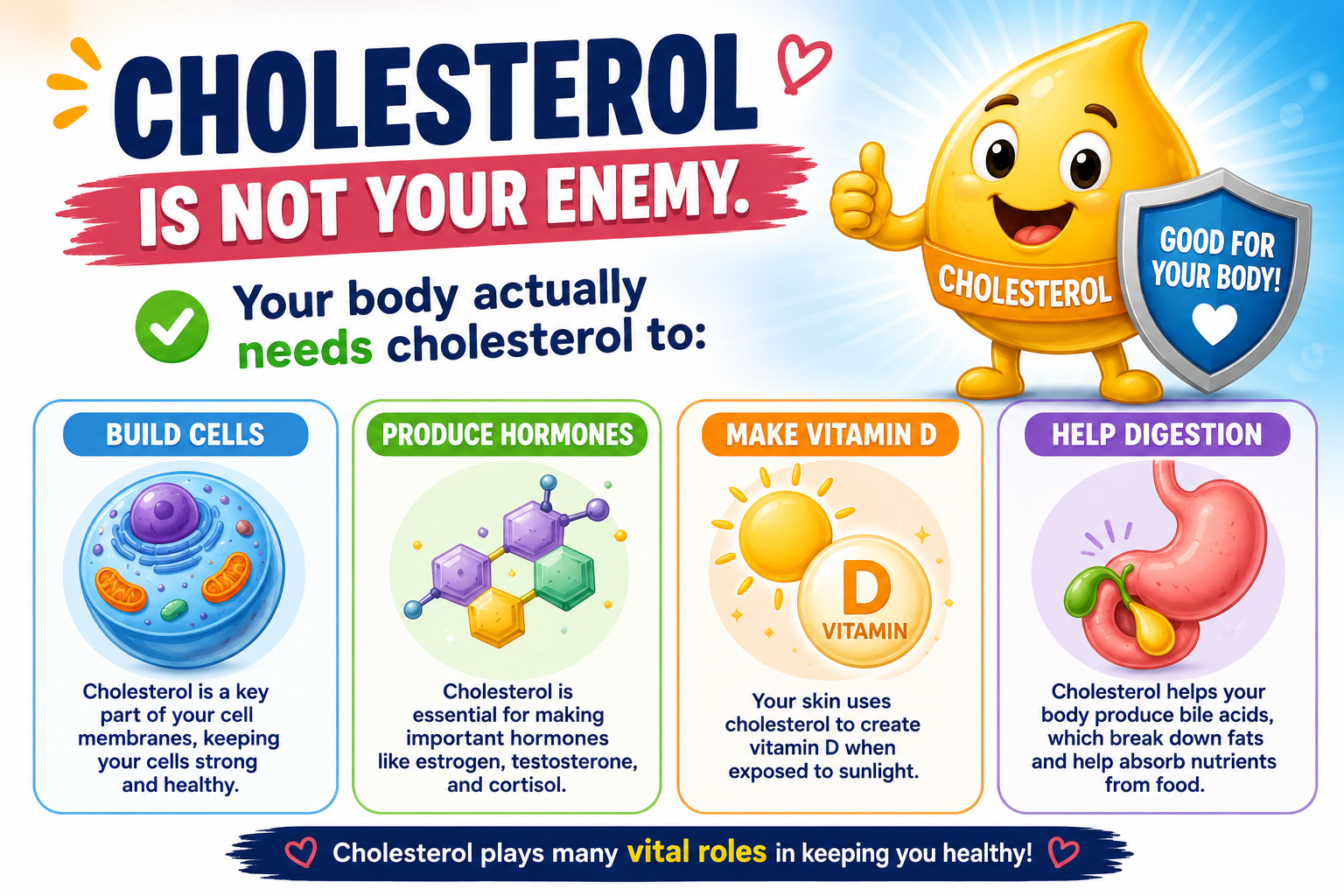
Cholesterol is not your enemy.
Your body actually needs cholesterol to:
Build cells
Produce hormones
Make vitamin D
Help digestion
Think of cholesterol like cement used to build a house.
The problem isn't the cement.
The problem is when too much cement gets dumped into narrow roads.
That's when traffic jams happen inside your blood vessels.
And that's what increases your risk of heart attack and stroke.
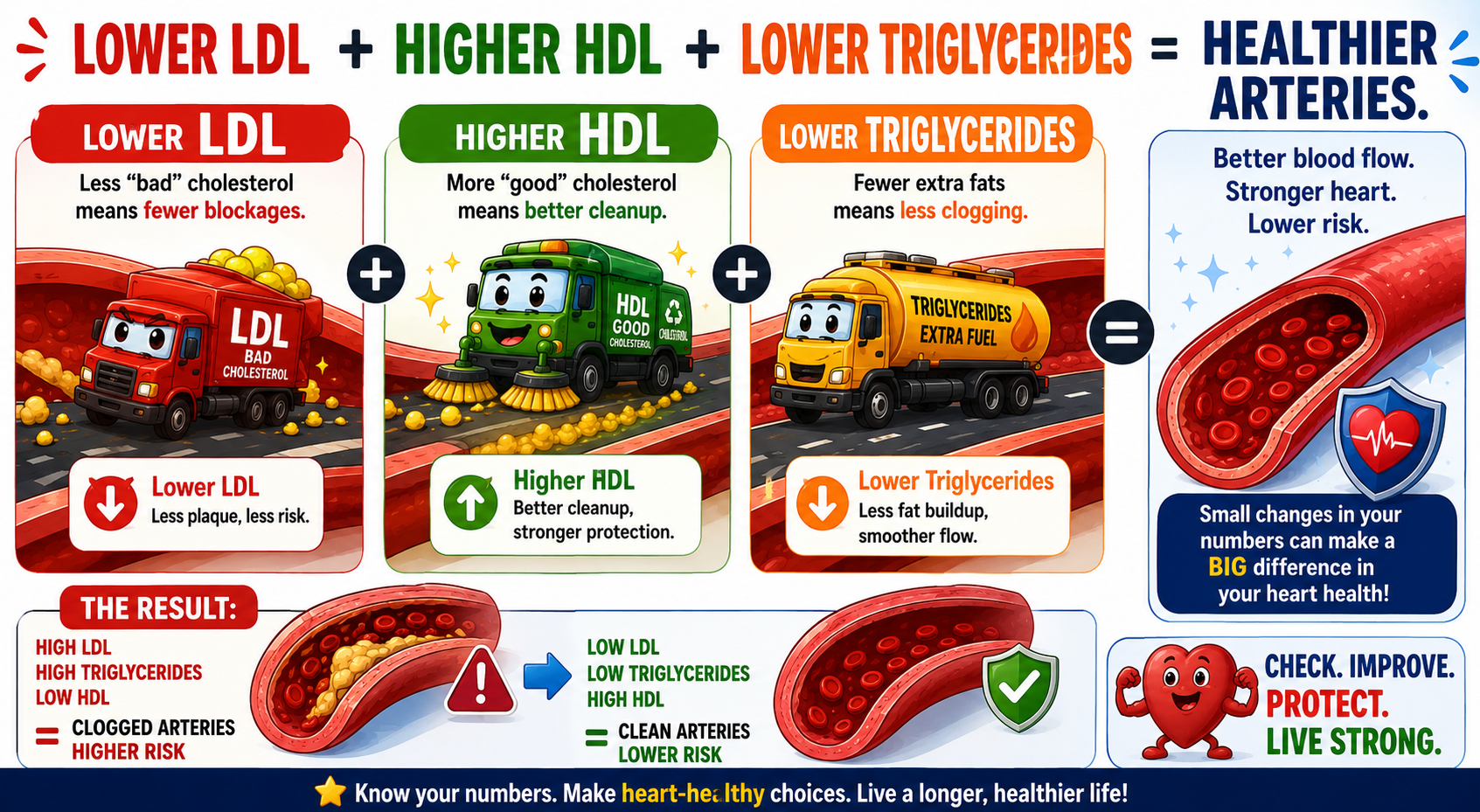
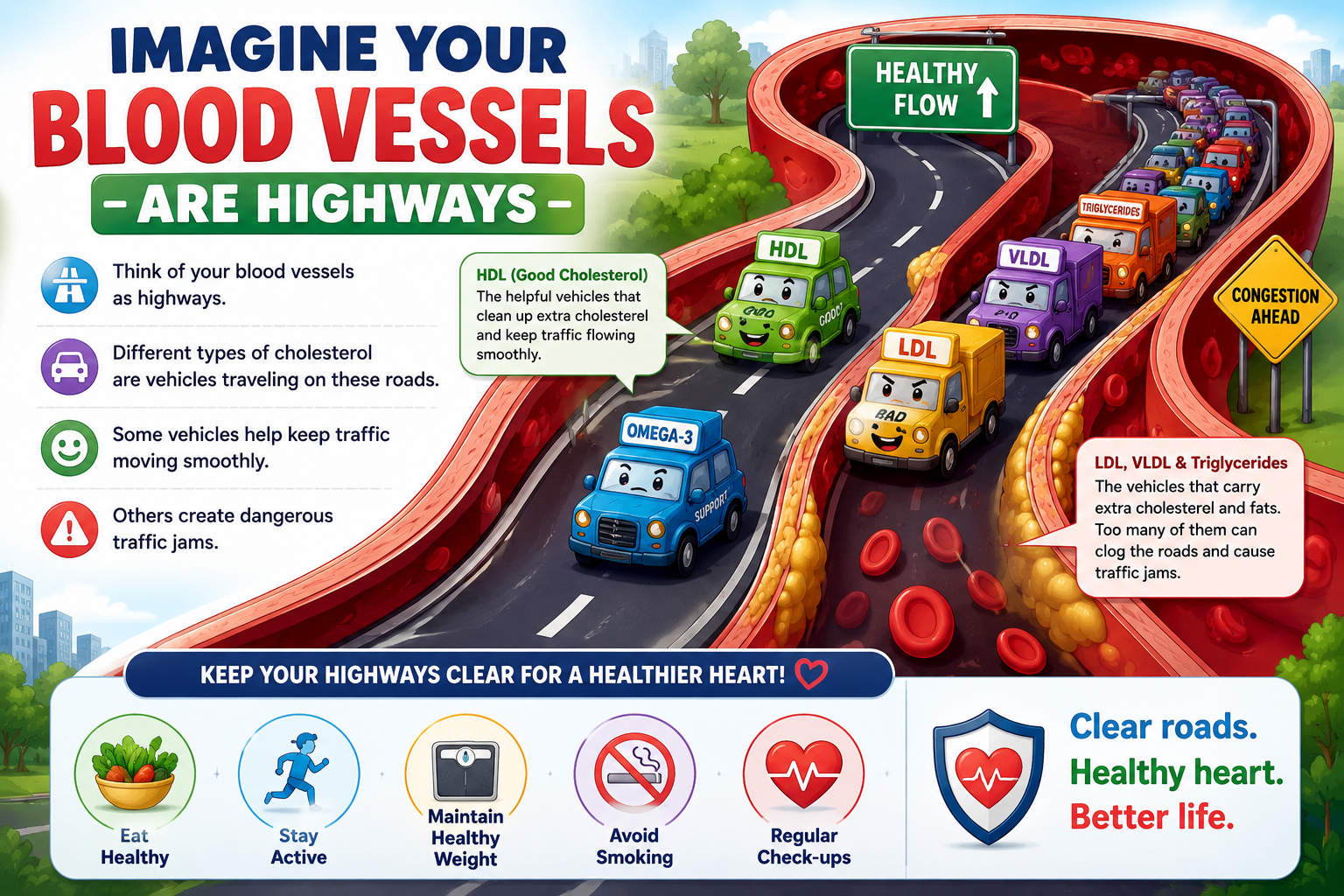
Think of your blood vessels as highways.
Different types of cholesterol are vehicles traveling on these roads.
Some vehicles help keep traffic moving smoothly.
Others create dangerous traffic jams.
Let's meet the four important numbers on your report.
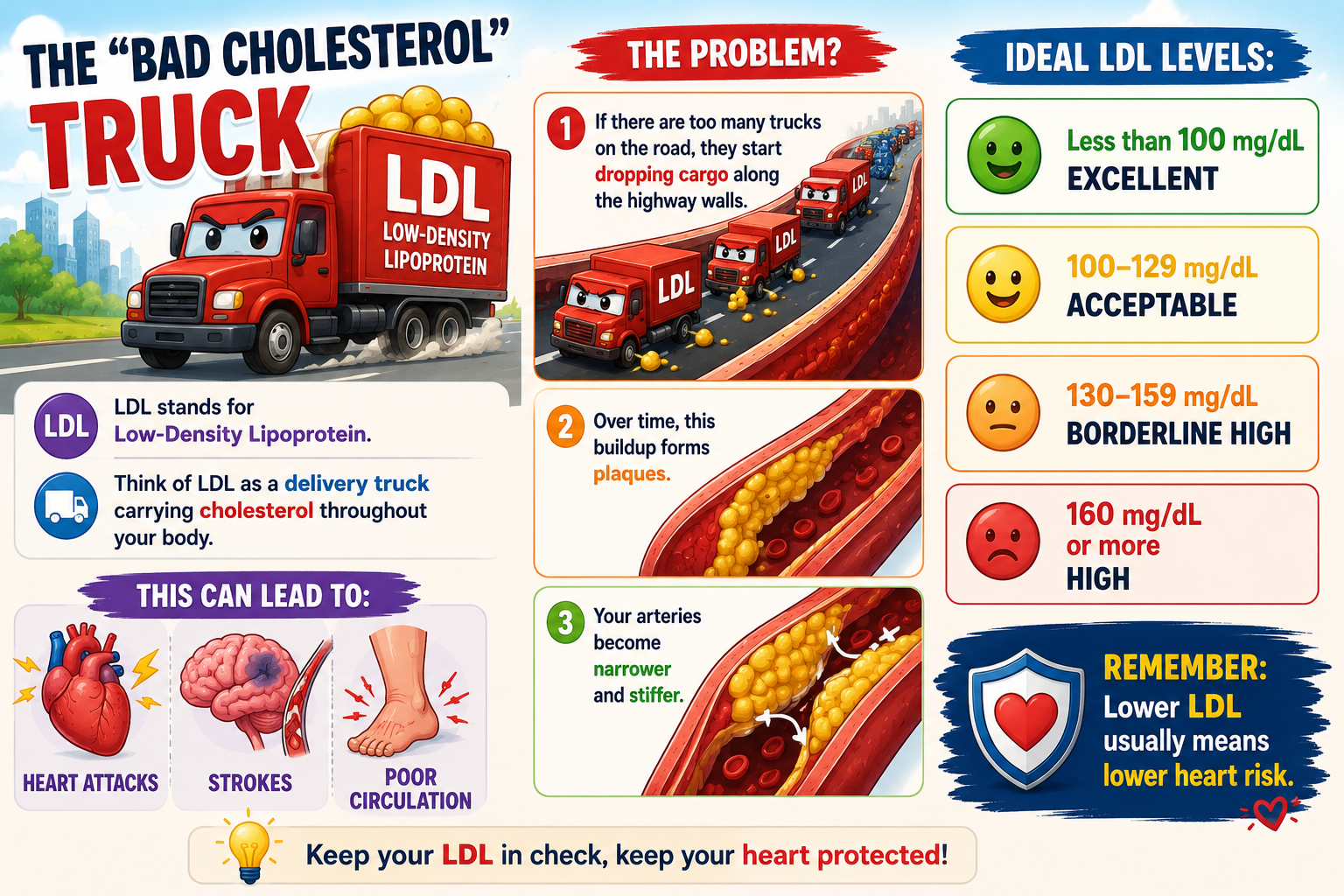
LDL stands for Low-Density Lipoprotein.
Think of LDL as a delivery truck carrying cholesterol throughout your body.
The problem?
If there are too many trucks on the road, they start dropping cargo along the highway walls.
Over time, this buildup forms plaques.
Your arteries become narrower and stiffer.
This can lead to:
Heart attacks
Strokes
Poor circulation
That's why LDL is called the "bad cholesterol."
Less than 100 mg/dL: Excellent
100–129 mg/dL: Acceptable
130–159 mg/dL: Borderline high
160 mg/dL or more: High
Remember: Lower LDL usually means lower heart risk.
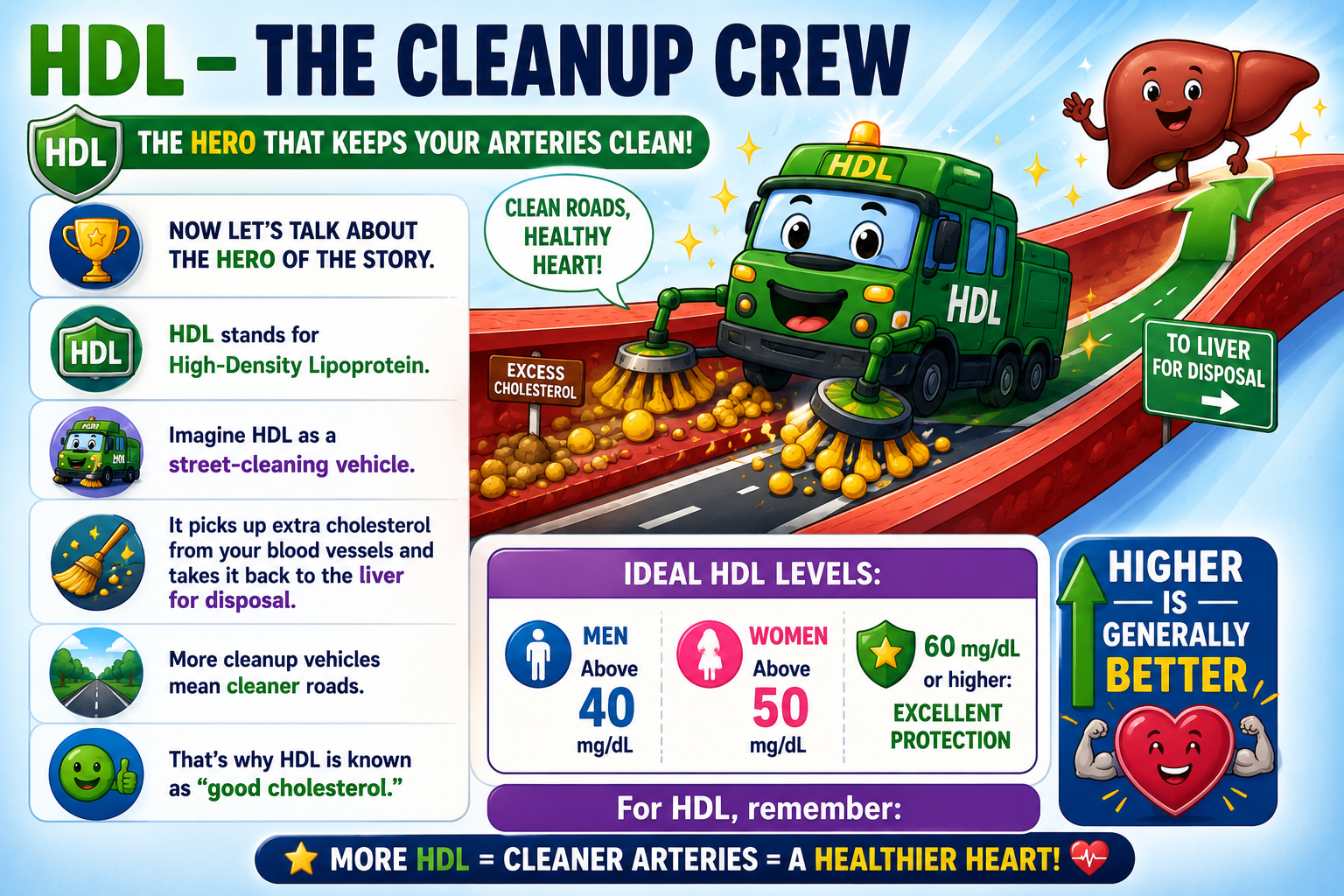
Now let's talk about the hero of the story.
HDL stands for High-Density Lipoprotein.
Imagine HDL as a street-cleaning vehicle.
It picks up extra cholesterol from your blood vessels and takes it back to the liver for disposal.
More cleanup vehicles mean cleaner roads.
That's why HDL is known as "good cholesterol."
Men: Above 40 mg/dL
Women: Above 50 mg/dL
60 mg/dL or higher: Excellent protection
For HDL, remember:
Higher is generally better.
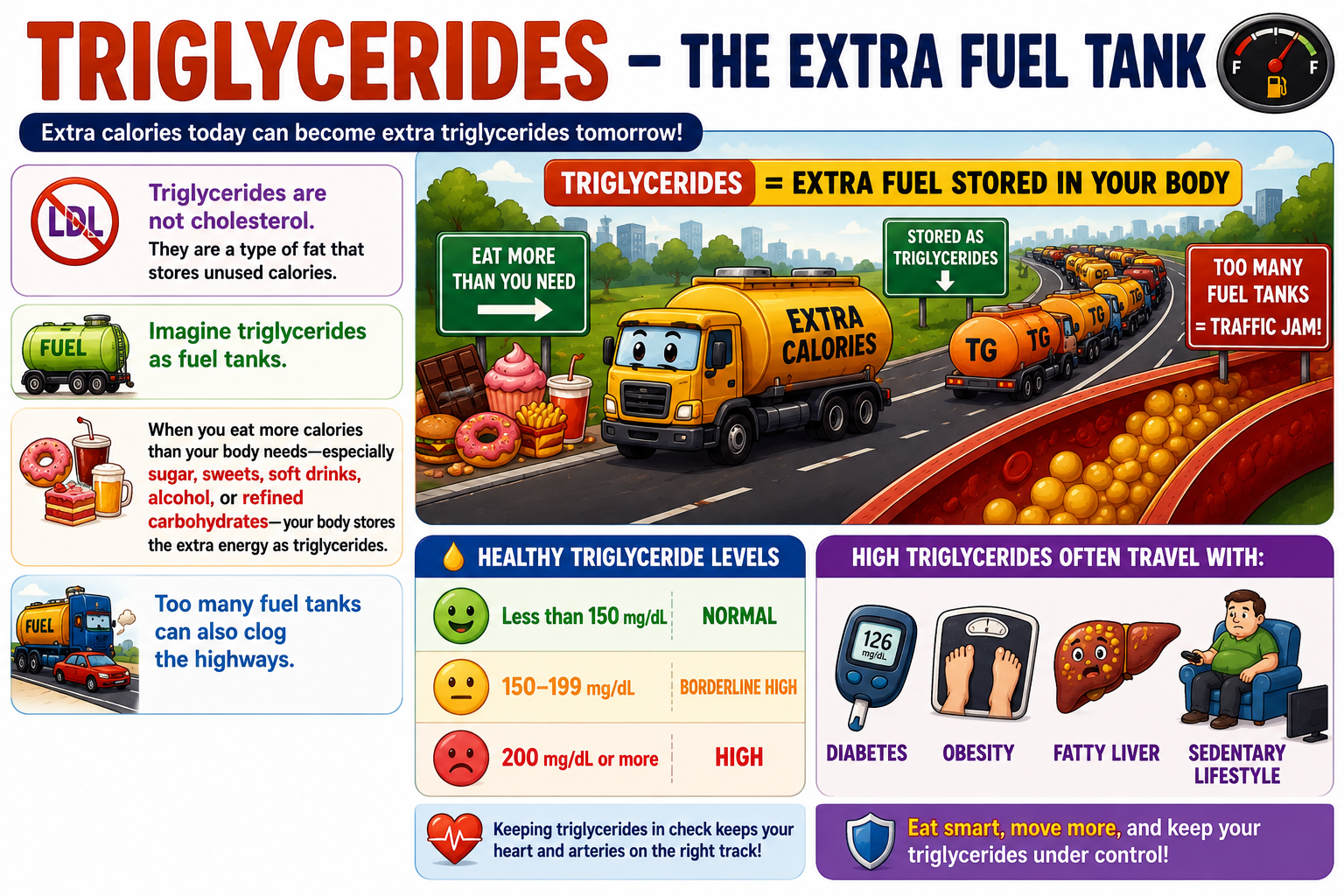
Triglycerides are not cholesterol.
They are a type of fat that stores unused calories.
Imagine triglycerides as fuel tanks.
When you eat more calories than your body needs—especially sugar, sweets, soft drinks, alcohol, or refined carbohydrates—your body stores the extra energy as triglycerides.
Too many fuel tanks can also clog the highways.
Less than 150 mg/dL: Normal
150–199 mg/dL: Borderline high
200 mg/dL or more: High
High triglycerides often travel with:
Diabetes
Obesity
Fatty liver
Sedentary lifestyle
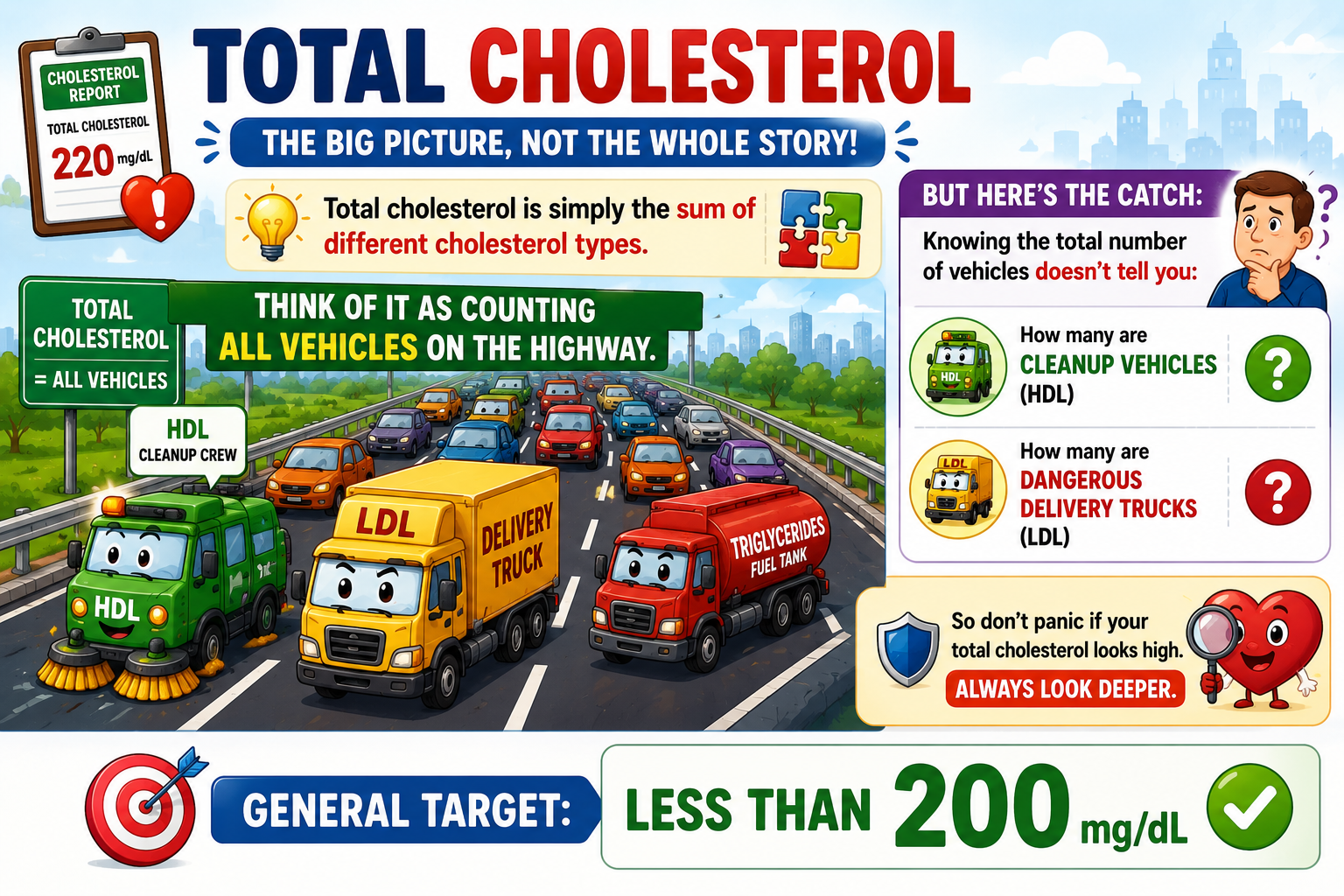
Total cholesterol is simply the sum of different cholesterol types.
Think of it as counting all vehicles on the highway.
But here's the catch:
Knowing the total number of vehicles doesn't tell you:
How many are cleanup vehicles (HDL)
How many are dangerous delivery trucks (LDL)
So don't panic if your total cholesterol looks high.
Always look deeper.
Less than 200 mg/dL
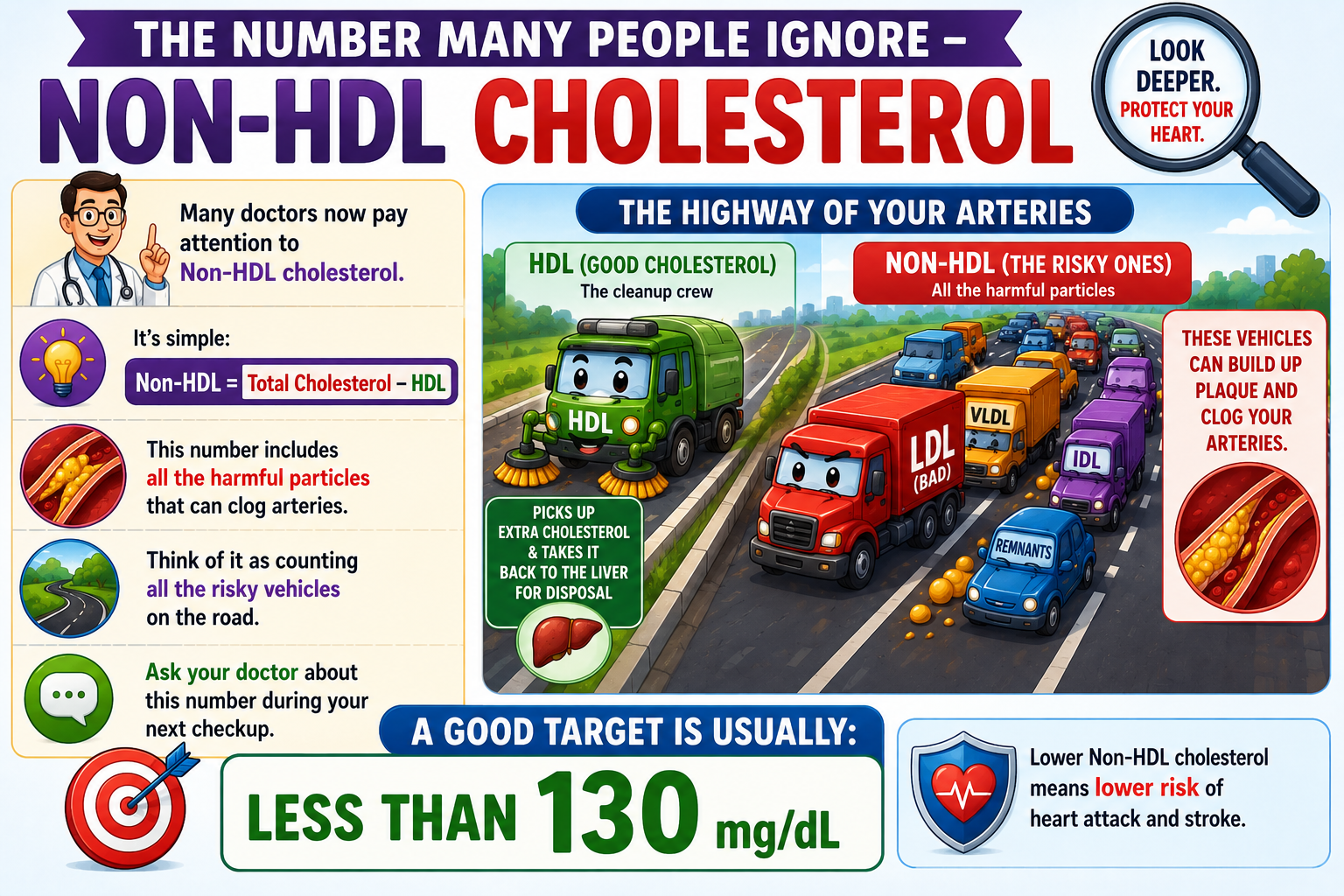
Many doctors now pay attention to Non-HDL cholesterol.
It's simple:
Non-HDL = Total Cholesterol − HDL
This number includes all the harmful particles that can clog arteries.
Think of it as counting all the risky vehicles on the road.
A good target is usually:
Less than 130 mg/dL
Ask your doctor about this number during your next checkup.
When you receive your report, ask yourself these four questions:
✅ Is my LDL low?
✅ Is my HDL high?
✅ Are my triglycerides normal?
✅ What is my Non-HDL cholesterol?
That's it.
You don't need to memorize dozens of numbers.
Just remember:
Lower LDL + Higher HDL + Lower Triglycerides = Healthier arteries.
Good news.
Small changes can make a big difference.
Fruits and vegetables
Oats and whole grains
Nuts and seeds
Beans and legumes
Fish rich in omega-3
Fried foods
Processed snacks
Sugary drinks
Excess sweets
Trans fats
Aim for at least 30 minutes of walking, five days a week.
Sometimes lifestyle changes aren't enough.
Your doctor may recommend medications such as statins.
Taking medicine is not a failure.
It's protection.
One cholesterol report does not tell the whole story.
Your doctor also considers:
Age
Blood pressure
Diabetes status
Smoking history
Family history of heart disease
Two people with the same cholesterol numbers may have completely different risks.
Always discuss your report with your healthcare provider.
The next time you see your cholesterol report, don't be intimidated.
Just remember this simple highway analogy:
🚚 LDL delivers cholesterol.
🧹 HDL cleans it up.
⛽ Triglycerides store extra fuel.
🛣️ Your arteries are the highways.
Keep the roads clear, and your heart will thank you.
If you found this video helpful, share it with someone who recently had a blood test.
And comment below:
"What was the most confusing number on your cholesterol report?"
Don't forget to like, subscribe, and stay informed—because understanding your health is the first step toward protecting it.
 Continue With Google
  Science
 Pharmaceutical