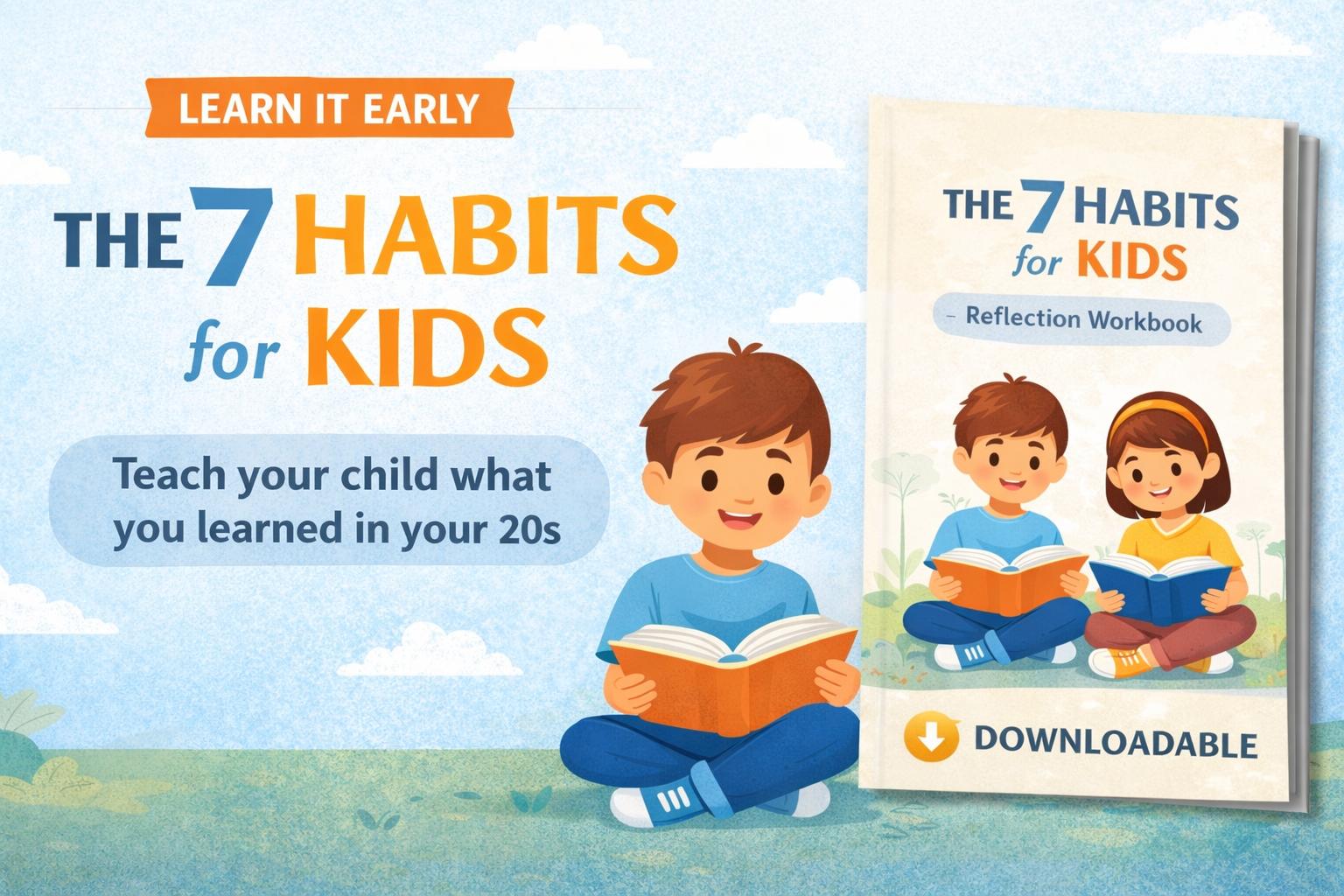
This is written for parents to read, for kids to understand.
This book is a simplified, child-friendly version of
The 7 Habits of Highly Effective People.
The ideas are the same.
The language is gentler.
The examples come from a child’s daily life.
Each habit includes:
What the habit means (original idea)
How a child can understand it
A simple activity to practice it
Original idea:
We are responsible for our choices and reactions.
For kids:
Even when things go wrong, you can choose what to do next.
You can’t control everything.
But you can control your behavior.
Kid example:
If someone teases you, you can choose to shout — or walk away.
Ask your child:
“What could you choose differently next time?”
Let them answer in their own words.
Original idea:
Start with a clear goal.
For kids:
Before you start something, think about how you want it to finish.
Kid example:
Before starting homework, imagine finishing it calmly and feeling proud.
Ask your child to draw:
How they want their day or task to end
Original idea:
Do important tasks before distractions.
For kids:
Some things need to be done before playtime.
Kid example:
Homework before TV.
Cleaning up before games.
Together, list:
1 important thing
1 fun thing
Do the important one first.
Original idea:
Look for solutions where everyone benefits.
For kids:
You don’t always have to win alone.
Kid example:
Sharing toys so both friends enjoy playing.
Ask:
“How can both people feel happy here?”
Original idea:
Understand before being understood.
For kids:
Listen fully before speaking.
Kid example:
Letting a friend finish talking before replying.
Practice:
One minute of silent listening
Then repeat what the other person said
Original idea:
Teamwork creates better results.
For kids:
Working together helps everyone do better.
Kid example:
Building something with siblings or friends.
Do one task together and talk about:
What was easier together?
Original idea:
Renew your energy.
For kids:
Rest, play, learn, and talk about feelings.
Kid example:
Sleeping well, playing outside, reading, talking to parents.
Create a simple routine:
Sleep
Play
Learn
Talk
Download the attached printable PDF journal to turn these lessons into daily habits for your child
 Continue With Google
  Education