युक्ताहारविहारस्य युक्तचेष्टस्य कर्मसु ।
युक्तस्वप्नावबोधस्य योगो भवति दुःखहा ॥
Transliteration:
Yuktāhāra-vihārasya yukta-ceṣṭasya karmasu
Yukta-svapnāvabodhasya yogo bhavati duḥkha-hā
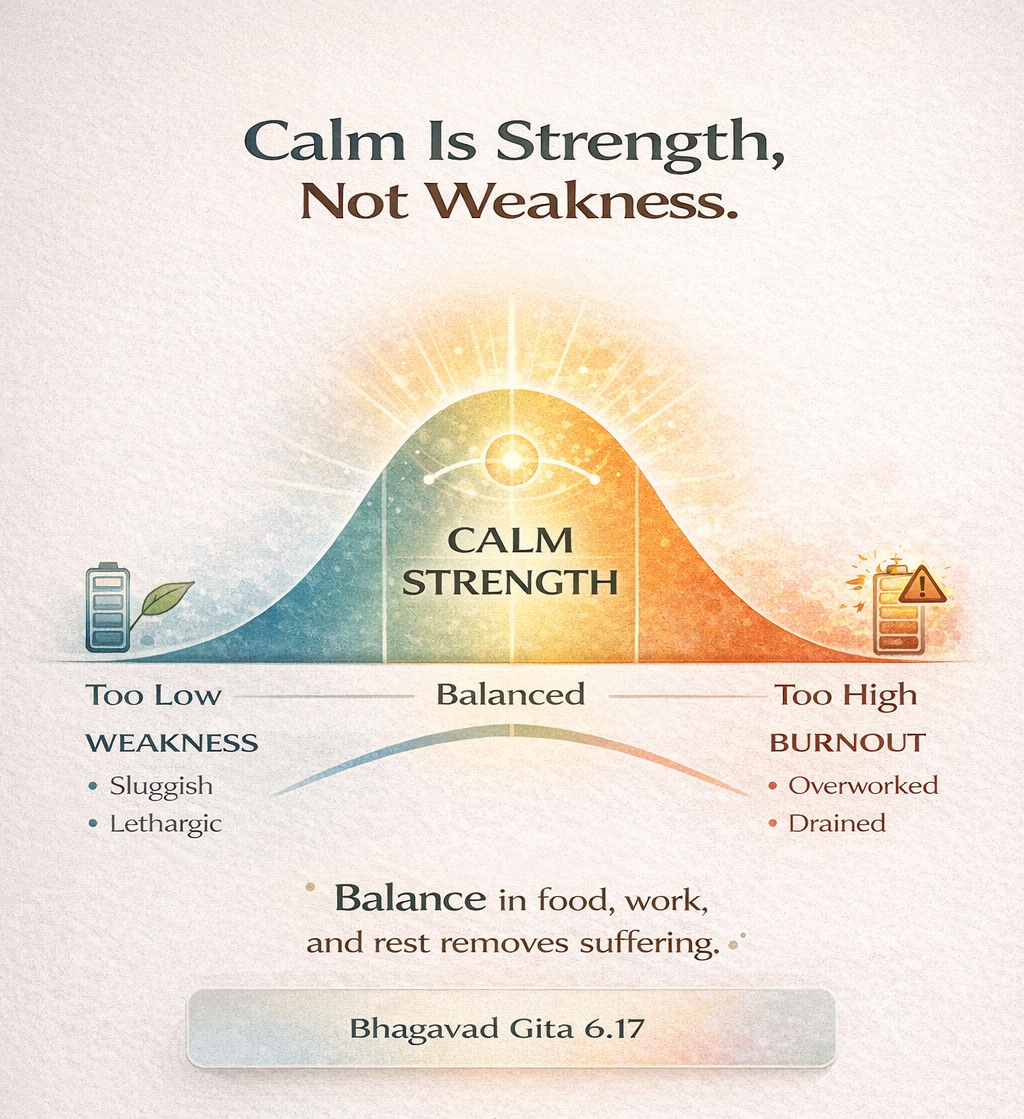
A balanced life — in food, work, rest, and effort —
leads to clarity and reduces suffering.
Peace comes not from extremes,
but from moderation.
Mid-life often rewards excess:
Working longer hours
Carrying more responsibility
Ignoring rest and emotional needs
This is often praised as “strength.”
The Gita quietly disagrees.
It says real strength lies in knowing when to stop,
when to rest,
and when to refuse unnecessary strain.
Krishna is not asking you to slow down life.
He is asking you to stop living in extremes.
Too much work dulls the mind.
Too much rest weakens discipline.
Too much control creates rigidity.
Balance keeps the inner system functional.
You don’t glorify exhaustion anymore
You respect your physical and mental limits
You choose sustainable routines over bursts of intensity
Calm is not passivity.
It is regulated energy.
A calm person:
Thinks clearly
Reacts less
Endures more
Calm is not the absence of effort.
It is effort without inner chaos.
You don’t need to push harder to be strong.
Sometimes, the strongest thing you can do
is live in balance — and stay steady.
 Continue With Google
  Quotes
 Yoga
Yoga