✅ 100 Questions with One-Word
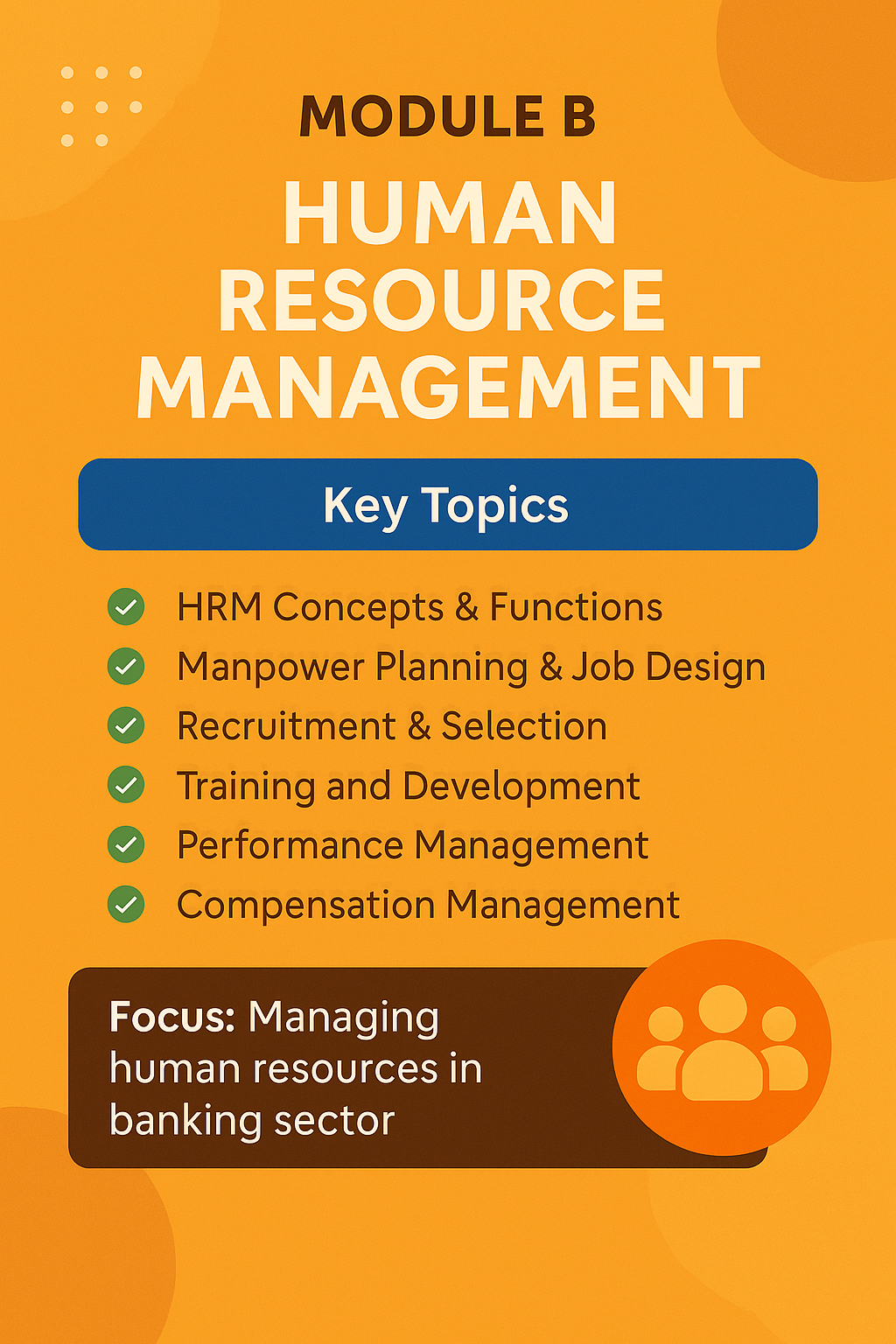
Answers (HRM – Module B)
Fundamentals of HRM (1–15)
- HRM
primarily deals with management of ______ resources.
Answer: Human
- HRD is
mainly concerned with employee ______.
Answer: Development
- Strategic
HRM aligns HR practices with ______ goals.
Answer: Organizational
- The
role of HR professionals is becoming increasingly ______.
Answer: Strategic
- HRM
ensures optimum utilization of ______.
Answer: Talent
- HRD
focuses on enhancing knowledge, skills, and ______.
Answer: Attitudes
- Training
is a key function under ______.
Answer: HRD
- Structure
of HRM includes staffing, training, and ______.
Answer: Compensation
- HRD
includes performance appraisal and ______.
Answer: Training
- The
modern HR approach is ______ centered.
Answer: Employee
- HRM
aims to improve employee ______.
Answer: Productivity
- Development
of HR functions in India accelerated after economic ______.
Answer: Liberalization
- HRM
relates to managing people at ______.
Answer: Work
- HRD
helps in developing employee ______.
Answer: Competence
- HRM
and HRD together enhance organizational ______.
Answer: Effectiveness
Development of Human Resources (16–35)
- HRD
has three subsystems: training, organization development, and ______.
Answer: Career
- L&D
aims to enhance employee ______.
Answer: Skills
- Attitude
development shapes employee ______.
Answer: Behaviour
- Career
planning involves setting ______ goals.
Answer: Career
- Self-development
is driven by ______ motivation.
Answer: Intrinsic
- Identifying
high-potential employees is a part of ______ management.
Answer: Talent
- Replacing
key positions is planned under ______ planning.
Answer: Succession
- HRD
ensures continuous ______.
Answer: Learning
- Coaching
is a form of ______ development.
Answer: Personal
- Orientation
is the process of new employee ______.
Answer: Induction
- Mentoring
supports long-term employee ______.
Answer: Growth
- Employee
capabilities are enhanced through structured ______.
Answer: Training
- Employees’
soft skills are improved under ______ development.
Answer: Attitude
- Future
leaders are developed through ______ planning.
Answer: Succession
- Skill
gap analysis is part of ______ management.
Answer: Talent
- Competency
building is a key objective of ______.
Answer: HRD
- A
career path is a planned ______ progression.
Answer: Work
- Knowledge
enhancement is central to ______.
Answer: Learning
- Personality
development influences employee ______.
Answer: Behaviour
- Motivation
programs support employee ______.
Answer: Development
Human Implications of Organizations (36–55)
- People
differ due to individual ______.
Answer: Differences
- Employee
behaviour at work is influenced by ______.
Answer: Motivation
- Diversity
at workplace enhances ______.
Answer: Innovation
- Gender
diversity promotes workplace ______.
Answer: Inclusion
- Maslow
proposed the hierarchy of ______.
Answer: Needs
- Herzberg's
theory is also known as ______ factor theory.
Answer: Two
- The
study of human behaviour in organizations is ______ behavior.
Answer: Organizational
- The
social role of an individual is defined as a ______.
Answer: Function
- McGregor
proposed Theory X and Theory ______.
Answer: Y
- Behaviour
is shaped by individual ______.
Answer: Personality
- Diversity
management promotes ______ treatment.
Answer: Equal
- Conflict
at workplace is ______.
Answer: Inevitable
- Motivation
drives employee ______.
Answer: Performance
- Role
analysis clarifies individual ______.
Answer: Expectations
- Equity
theory focuses on perceived workplace ______.
Answer: Fairness
- Behaviour
is a result of perception and ______.
Answer: Attitude
- Job
satisfaction improves employee ______.
Answer: Retention
- Workplace
inclusion fosters ______.
Answer: Belonging
- Emotional
intelligence helps manage ______.
Answer: Emotions
- Gender
issues relate to workplace ______.
Answer: Equality
Employee Feedback & Reward System (56–65)
- Employee
feedback helps improve ______.
Answer: Performance
- Reward
systems motivate employee ______.
Answer: Effort
- Compensation
includes salary and ______.
Answer: Benefits
- Recognition
is a form of ______ reward.
Answer: Nonfinancial
- Fair
pay influences employee ______.
Answer: Satisfaction
- Incentives
are linked to employee ______.
Answer: Achievement
- Bonuses
are an example of ______ rewards.
Answer: Monetary
- Feedback
must be timely and ______.
Answer: Constructive
- Compensation
strategy ensures internal ______.
Answer: Equity
- Reward
systems support employee ______.
Answer: Motivation
Performance Management (66–80)
- Performance
appraisal assesses employee ______.
Answer: Performance
- Counselling
helps employees overcome ______.
Answer: Problems
- Competency
mapping identifies key ______.
Answer: Skills
- BEI
stands for Behavioural ______ Interview.
Answer: Event
- Assessment
centres test multiple ______.
Answer: Competencies
- Appraisal
systems evaluate employee ______.
Answer: Output
- Feedback
improves individual ______.
Answer: Growth
- Goal
setting is a part of performance ______.
Answer: Planning
- 360-degree
appraisal collects ______ feedback.
Answer: Multi-source
- Appraisal
interviews provide performance ______.
Answer: Review
- KRAs
stand for Key Result ______.
Answer: Areas
- KPIs
stand for Key Performance ______.
Answer: Indicators
- Performance
monitoring ensures continuous ______.
Answer: Improvement
- Counselling
aims at employee ______.
Answer: Development
- Appraiser
evaluates employee ______.
Answer: Contribution
Conflict Management & Negotiation (81–90)
- Conflict
arises from incompatible ______.
Answer: Goals
- Conflict
is ______ in organizations.
Answer: Natural
- Win-win
negotiation promotes mutual ______.
Answer: Benefit
- Conflict
resolution aims for organizational ______.
Answer: Harmony
- Conflict
may be interpersonal or ______.
Answer: Intragroup
- Negotiation
requires effective ______.
Answer: Communication
- A
major cause of conflict is poor ______.
Answer: Communication
- The
first phase of conflict is ______.
Answer: Latent
- Compromise
is a conflict ______ style.
Answer: Resolution
- Mediation
helps resolve ______.
Answer: Disputes
HRM & Information Technology (91–100)
- HRIS
stands for Human Resource ______ System.
Answer: Information
- HRMS
integrates multiple HR ______.
Answer: Functions
- e-HRM
uses ______ platforms for HR.
Answer: Digital
- HR
analytics relies on HR ______.
Answer: Data
- Technology
in HR improves ______.
Answer: Efficiency
- Knowledge
management organizes organizational ______.
Answer: Knowledge
- HR
databases store employee ______.
Answer: Records
- Technology-enabled
training is called ______ learning.
Answer: e
- HR
dashboards display HR ______.
Answer: Metrics
- HR
analytics helps in better ______ making.
Answer: Decision
 Continue With Google
  Account and Finance