Imagine a pharmaceutical company spends years developing a new medicine.
They invest:
Research
Clinical trials
Manufacturing
Marketing
After approval, they launch it under a brand name.
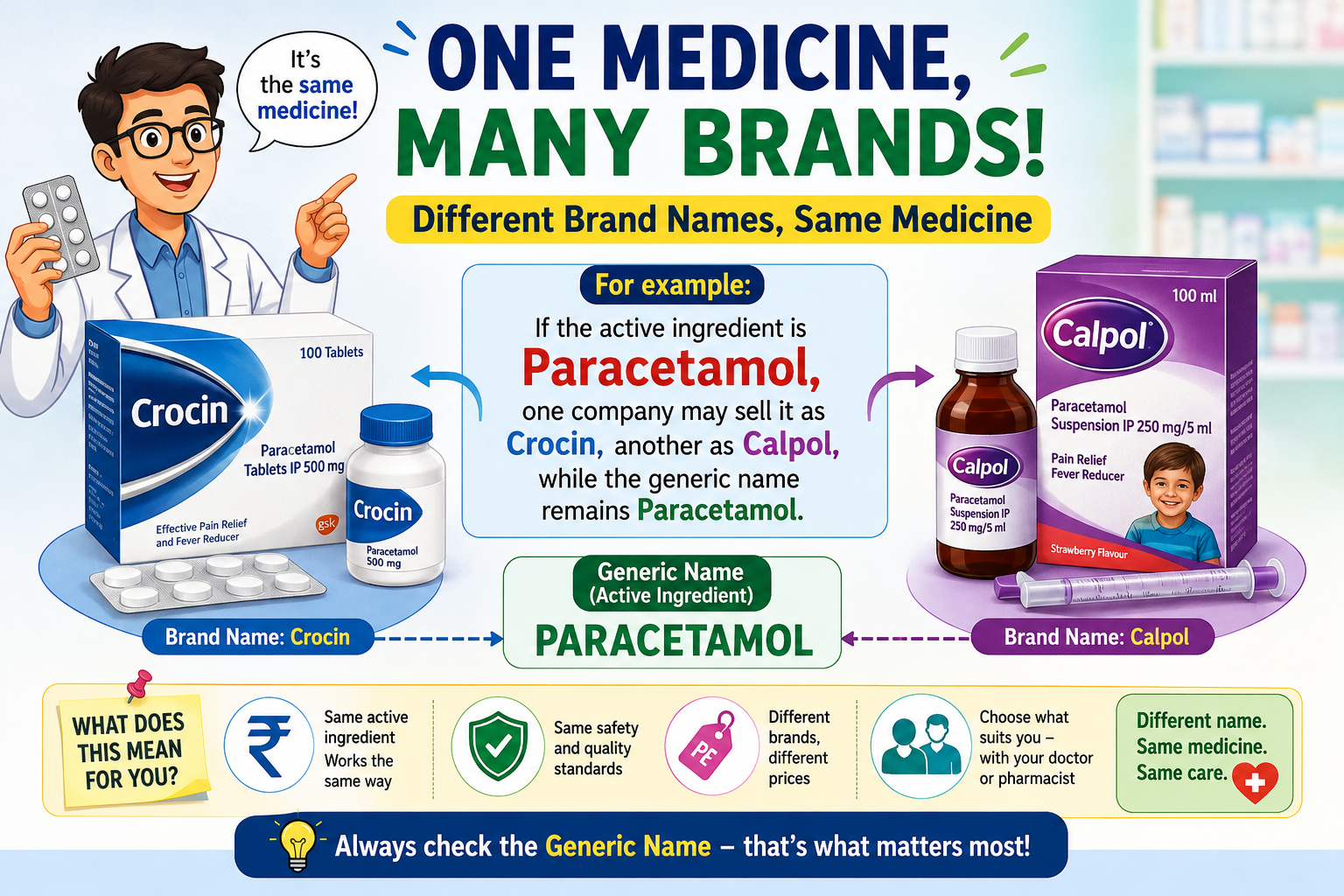
For example:
If the active ingredient is Paracetamol,
one company may sell it as Crocin, another as Calpol, while the generic name remains Paracetamol.
Think of it like bottled water.
The water inside may be the same, but the brand, bottle, advertising, and price differ.
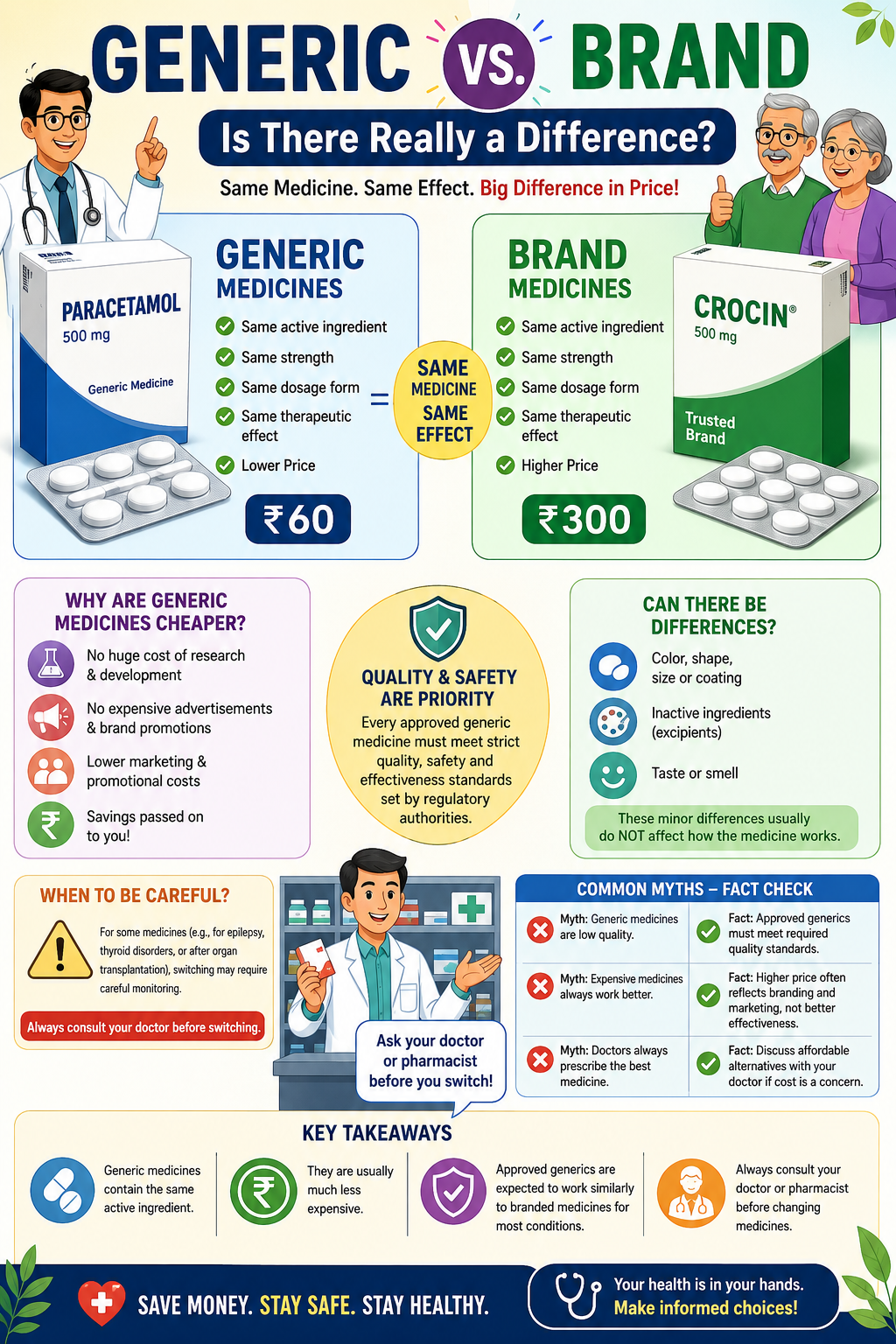
A generic medicine contains:
✅ The same active ingredient
✅ Same strength
✅ Same dosage form
✅ Same route of administration
✅ Same therapeutic effect
The main differences may include:
Color
Shape
Packaging
Company name
Price
But the medicine itself is designed to work the same.
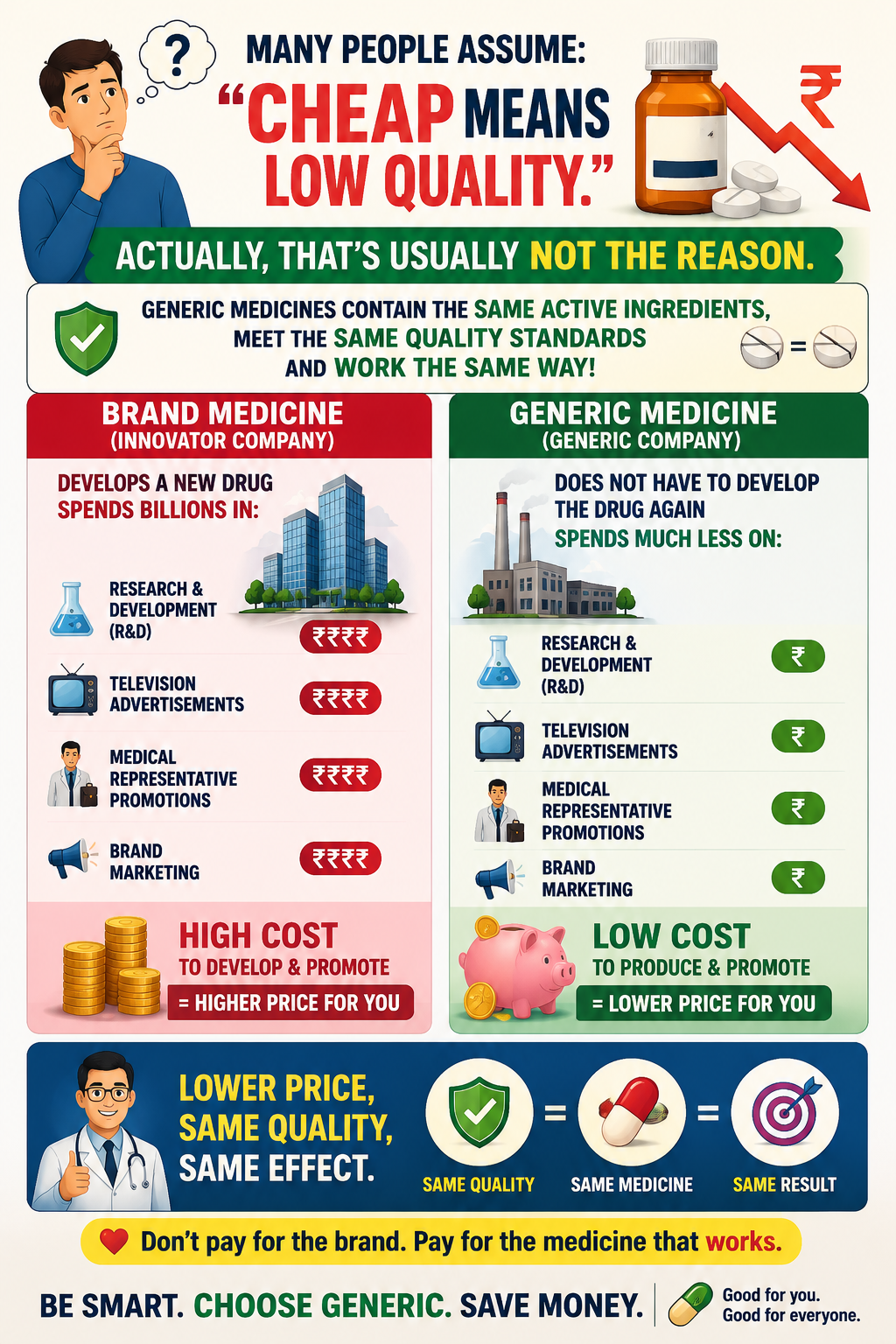
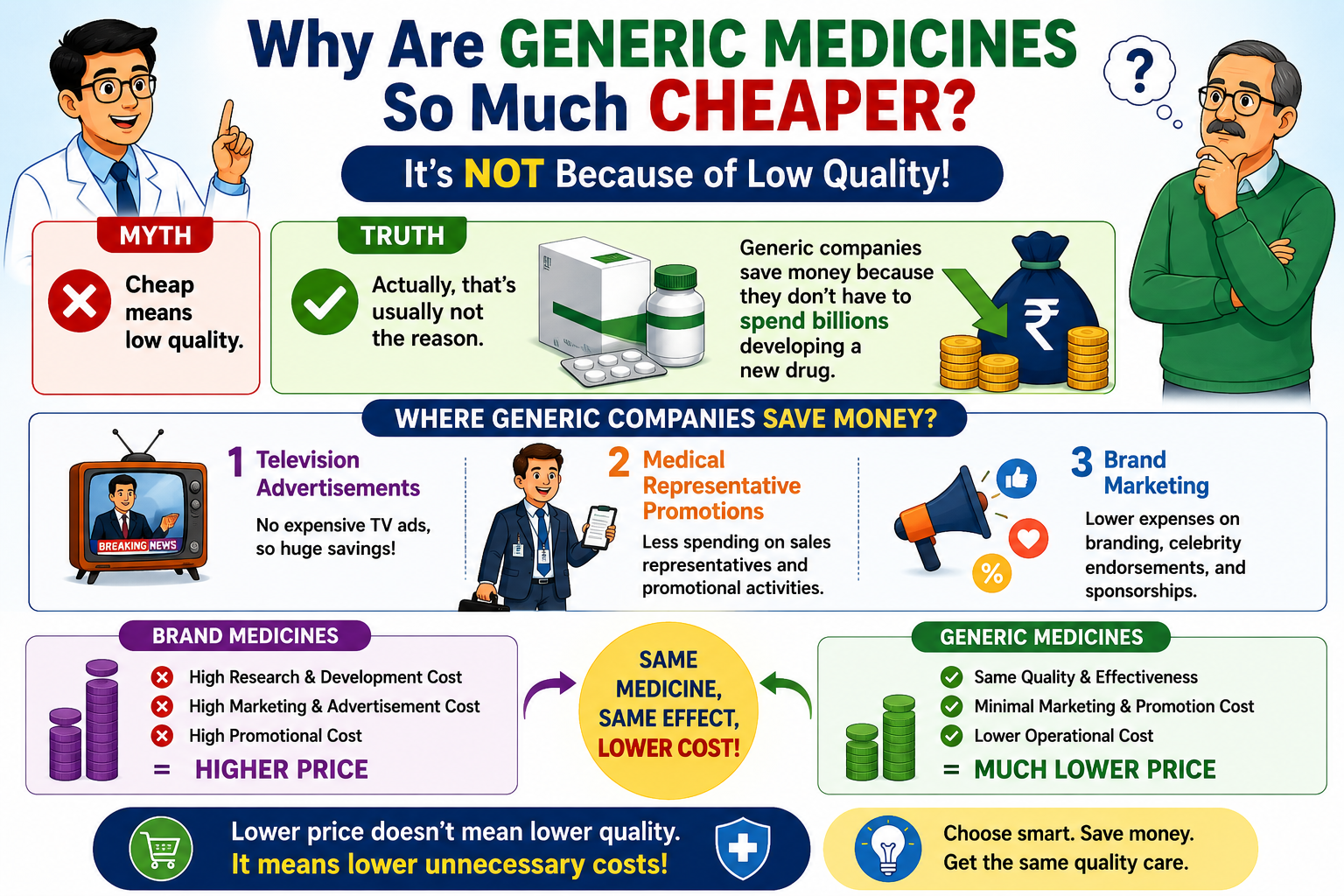
Many people assume:
"Cheap means low quality."
Actually, that's usually not the reason.
Generic companies save money because they don't have to spend billions developing a new drug.
They also spend much less on:
Television advertisements
Medical representative promotions
Brand marketing
So the medicine can be sold at a much lower cost.
This is the most important question.
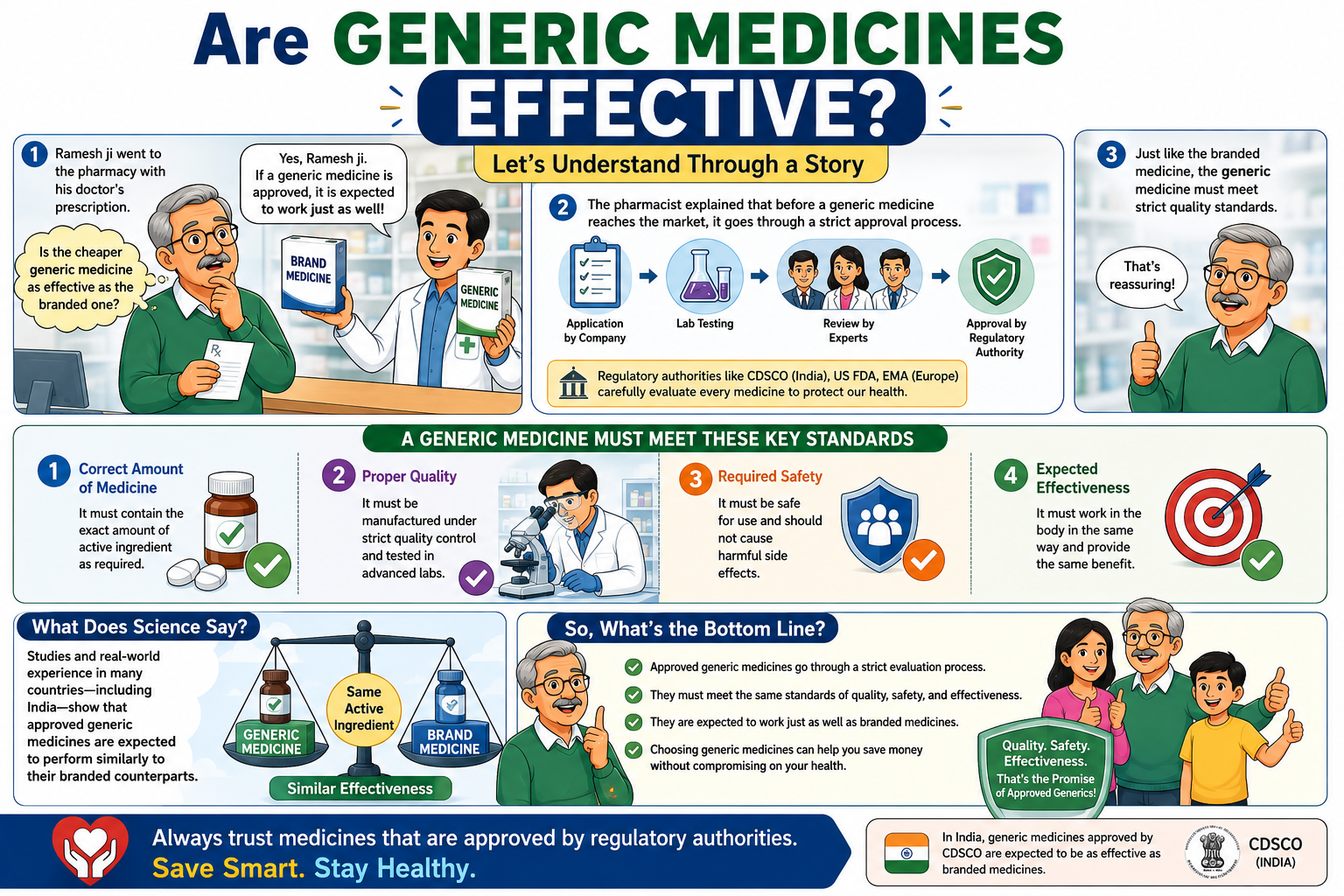
Before a generic medicine is approved, it must meet strict quality standards set by regulatory authorities.
It should have:
Correct amount of medicine
Proper quality
Required safety
Expected effectiveness
In many countries—including India—approved generic medicines are expected to perform similarly to their branded counterparts.
So, for most common conditions, approved generic medicines work just as well as branded medicines.
Yes—but usually minor ones.
For example:
Tablet color
Tablet size
Coating
Taste
Inactive ingredients (called excipients)
These usually do not affect how the medicine works.
However, a few medicines—such as certain medicines used for epilepsy, thyroid disorders, or after organ transplantation—may require careful monitoring. In such cases, patients should avoid switching products without consulting their doctor.
Never change your medicine without discussing it with:
Your doctor
Your pharmacist
If your doctor has prescribed a specific brand for a particular reason, follow that advice.
If you're unsure whether a generic alternative is appropriate, ask your pharmacist or doctor before switching.
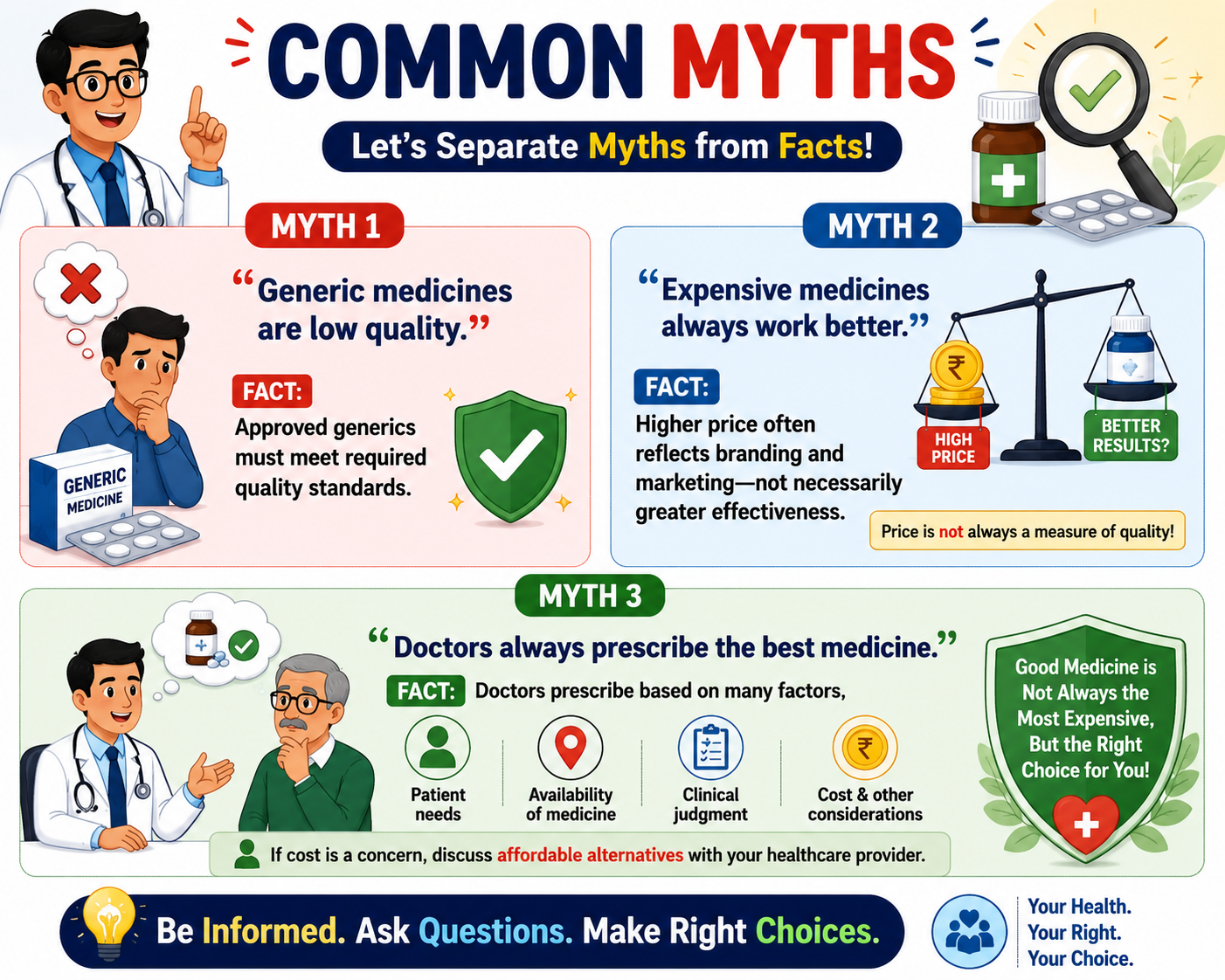
"Generic medicines are low quality."
Fact: Approved generics must meet required quality standards.
"Expensive medicines always work better."
Fact: Higher price often reflects branding and marketing—not necessarily greater effectiveness.
"Doctors always prescribe the best medicine."
Doctors prescribe based on many factors, including patient needs, availability, and clinical judgment. If cost is a concern, discuss affordable alternatives with your healthcare provider.
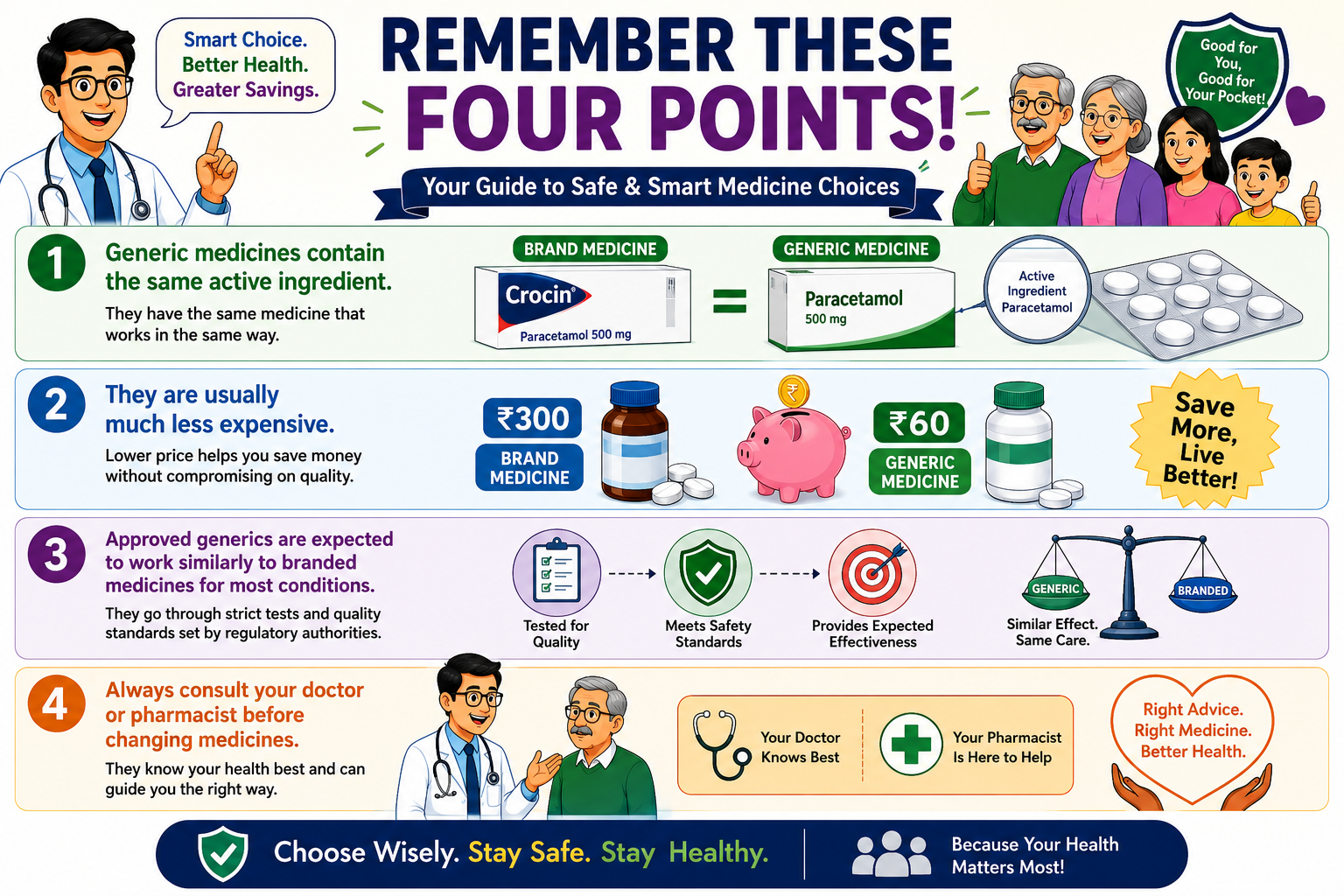
Remember these four points:
✅ Generic medicines contain the same active ingredient.
✅ They are usually much less expensive.
✅ Approved generics are expected to work similarly to branded medicines for most conditions.
✅ Always consult your doctor or pharmacist before changing medicines.
 Continue With Google
  Medicines